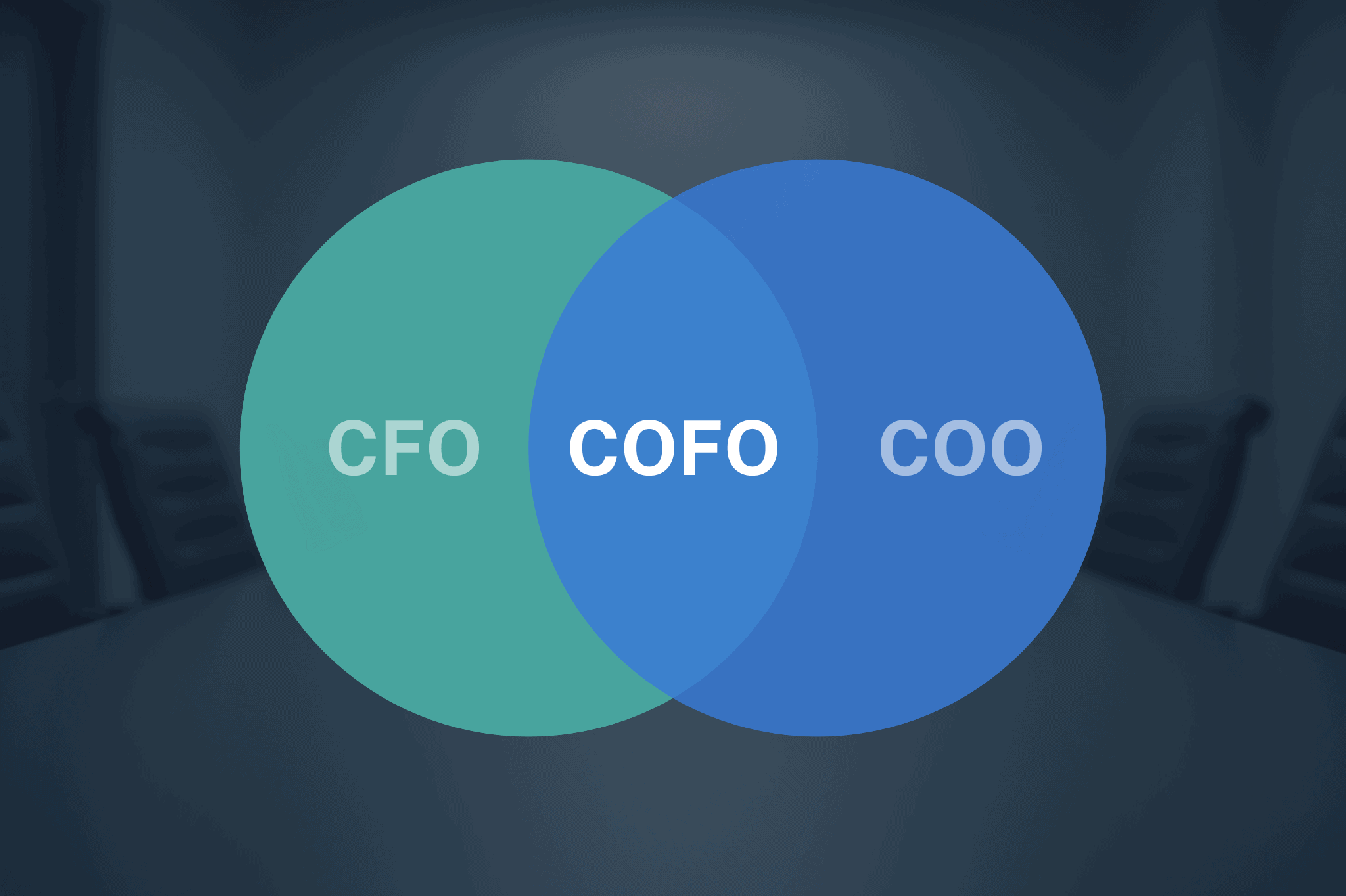
Why finance leaders are taking jobs—and why the new COFO role isn't a shortcut.
There's a new acronym making the rounds in the C-suite. The so-called COFO – chief operating officer and financial officer – is more common than ever, marking a structural change in the way companies decide who runs the business. But the combined role is dangerous: it works better to go in one direction than the other, say industry watchers Global Finance.
Salesforce made it official last year. The San Francisco-based company has named Robin Washington its first COFO — assigning the 30-year finance veteran to oversee both the balance sheet and the company's artificial intelligence (AI) and digital operations transformation.
PayPal, headquartered in San Jose, California, took a similar route. The company expanded CFO Jamie Miller's authority to oversee operations and finance, putting a single executive in charge of growth strategies that often require two separate memos and a joint meeting to work out. Two very different companies, same end: a manager who understands money is likely to be the person expected to move it.
While some observers view the trend as temporary, many industry leaders see hybrid COFO as a lasting change in business leadership.
“I think this is a trend that's here to stay,” said Jaylene Kunze, COFO at Denver-based LegitScript, a risk management service.
For decades, the CFO and the COO took on the form of an awkward office marriage: sharing a roof, dividing household chores, occasionally fighting each other when the numbers didn't add up.
“Historically, the CFO and COO used to work with each other automatically since the success of each depended on the other, but they did not have a complete picture to make sound decisions for the company,” added Kunze.
That being said: Is the COO job disappearing? Kunze calls “operational intelligence and real communication” with business “important.” However, he says the CFO chair changed past spreadsheets and GAAP.
“That's why the role of COFO is emerging as powerful,” he said. “It is not enough to build a model; you must know what growth goals you are driving towards and what strings you will pull, when and how.”
'The Perfect New Job'
Executive coach Edith Hamilton, who works with CFOs and COOs at NEXT New Growth, noticed a similar pattern.
“It's not inflation. It's a redistribution of authority,” he said, pointing to AI-driven process change as the most accelerating factor. But the honeymoon, he warns, is short.
“The second feeling is, 'Oh dear God, this is a new job.'” Boards, he added, flipped the script overnight — from “protecting the numbers” to “using your authority to change the business.”
His decision: for a long time, but not in general. “It will work for companies where finance and operations must be integrated – not just integrated.”
Sierra Hinson has lived this arrangement for over a decade under various titles. Most recently, as “partial CFOO” for his firm, Additive Insights. His reaction to the sudden noise? “What took so long?” The separation of funds and operations creates blind spots and slows everyone down, he said. And it appears at the worst possible time – going out. “In trading, buyers look for inconsistencies between what the financials say and what the performance shows,” he said. “The title is the easy part – the track record is not.”
You're Missing the Point
Not everyone is convinced that the way to go can be reversed. Ariela Tannenbaum, former CFO at Wilson Sonsini Goodrich & Rosati and now a profit architect, thinks the whole debate is about the wrong things. “The COFO debate misses the point in two respects,” he said. “First, the title. Whether you call it inflation or evolution, a title reflects accountability, not ability. The higher the title, the greater the responsibility. Renaming a role doesn't reduce it; it increases it.”
His second point focuses on the assumption that AI is behind all of this. “Quick information is not quick judgment,” Tannenbaum said. “The CFO or COO in the COFO role will spend as much time reviewing, analyzing, validating, and deciding as ever. AI is compressing the data cycle. The cycle of thinking, judgment, and responsibility remains the same.”
What actually drives this trend, he says, is a very old thing: good managers make good benches. “Senior finance leaders are already mentoring, promoting, and developing their teams until the CFO can spread his wings to take on expanded operational authority,” he said. If given the opportunity himself, he would not blink: “I would conduct the work confidently through the lens of finance, where clarity resides.”
Risk of Reversal of the COFO Role
But Tannenbaum, like Hamilton, sees this arrangement as working only in one direction. “Can an experienced CFO take over the role of COO? Absolutely,” he said. “Financial direction, resource allocation, performance accountability – these financial structures are used in practice.”
The reverse, however, is not equal.
A COO taking on the role of COFO presents real risks: technical gaps in financial analysis, legal exposure, and the kind of judgment calls that only come from deep financial knowledge.
His main point: “COFO is not a shortcut. But it works in one direction much better than the other.” And for companies focused on saving the bottom line instead of building real bench strength, he has an activist-adorned warning: “Can't get two big managers? Look under the light.”
Which brings the debate back to the question. Firms like Ridgeway Financial Service ask CEOs: does your team just report the numbers, or help run the business? Increasingly, in this new hybrid role, the answer is both – same office, same person, overloaded inbox.
Anthony Noto covers corporate finance and personal credit. Contact him at [email protected]