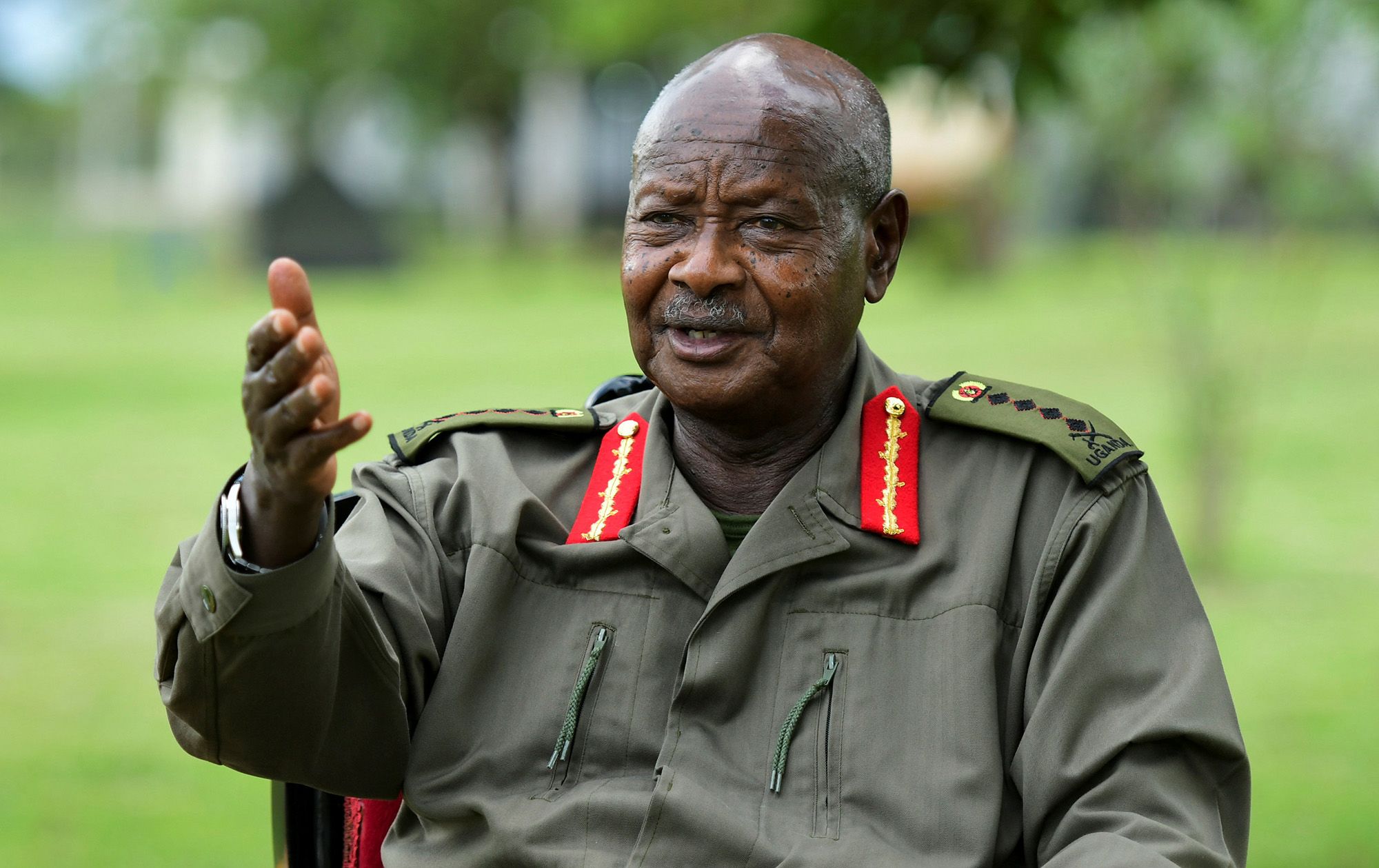
Yoweri MuseveniUganda's fortunes have come under renewed scrutiny after the long-time Ugandan leader was sworn in for a seventh term on May 12, 2026, extending his reign to a fifth decade at the center of East African politics.
The political season is important for finance because Uganda is approaching the most important economic transition in its modern history. Oil infrastructure projects are nearing production, the region's trade ambitions are growing, and foreign investors are increasingly looking at how power, wealth, and succession can shape the country's next era.
That also raised questions about Museveni's wealth.
Despite years of online speculation claiming everything from multi-million dollar wealth to billionaire status, there is still no independent public confirmation of Museveni's true worth. What exists instead is a mix of official income disclosures, political influence, state-linked economic reforms, and decades of suspicion, rumor, and online speculation that remain difficult to verify.
What is Yoweri Museveni's Total in 2026?
Most publicly circulated estimates place Museveni's wealth somewhere in the multi-million dollar range, although exact figures remain uncertain.
Other websites and social media posts have claimed numbers from $10 million to several billion dollars. The problem is that many of those statistics go back to recycled blogs, viral posts, YouTube videos, or unsourced rankings instead of audited financial disclosures.
Unlike publicly listed billionaires whose wealth can be directly tied to stocks or corporate holdings, political wealth estimates are often invisible and difficult to prove.
Museveni's officially disclosed presidential salary historically appears to be low by world standards. Public records and media reports previously suggested an annual compensation of less than $10,000 a year, although the president's influence in Uganda extends beyond official salary structures.
The real financial issue is not the check itself. The focus of political power on one of Africa's longest-serving leaders at a time when Uganda's economic importance is growing rapidly.
Why Museveni's Seventh Term Is Changing the Financial Debate
Museveni's recent inauguration is not just another political milestone. It may hinder the continuation of Uganda's oil boom.
That is important because Uganda is positioning itself as a future regional energy exporter through related projects East African crude oil pipeline and extensive infrastructure for petroleum development.
The country has spent years preparing for commercial oil production while at the same time trying to expand manufacturing, industrial processing, agriculture, ICT investment, and regional trade integration. Museveni has been presenting himself as the main architect of that change.
In a recent interview published by Forbes Africa, Museveni argued that Uganda's future depends on moving beyond raw material exports to high-value manufacturing and industrial development.
That broader economic change is now inseparable from questions about political continuity, strong influence, and long-term control over strategic industries.
The Oil Question Drives New Attention About Wealth
Uganda's oil ambitions have significantly changed the currency of the country's future.
The East African Crude Oil Pipeline project alone has become one of the continent's most ambitious energy developments, attracting international investment, environmental scrutiny, and political interest.
Whenever great wealth of power approaches a political system dominated by a long-serving leader, questions about influence and the enrichment of elites naturally arise.
That doesn't automatically mean the allegations circulating online are accurate. But it explains why speculation about Museveni's wealth resurfaces every time Uganda's economy enters a new phase of growth.
The political figures are much bigger now than they were ten years ago.
Museveni's Power Is Greater Than Salary
Another reason why the internet estimates of Museveni's wealth are so different is because many people confuse political influence with potential personal wealth.
Museveni first took power in 1986 after years of chaos and instability. Since then, he has overseen major political and economic reforms in Uganda, including privatization programs, military expansion, infrastructure development, industrial policy, agricultural trade, regional trade integration, and energy investment.
In his nearly 40 years in power, the presidency itself has been closely linked to Uganda's economic direction.
That creates a situation where political influence, support networks, government contracts, land control, and family power become part of the broader discussion of wealth even if a person's direct assets remain undisclosed.
Why Follow Up Questions Are Financially Important
Another reason why Museveni's financial discussion has intensified is the increasing visibility of his son, Muhoozi Kainerugaba.
For years, succession speculation has followed Ugandan politics. As Museveni enters another term in his 80s, attention is increasingly shifting to what future power transitions could mean for investors, regional stability, military strength, and economic continuity.
That's important for business because long-term political systems tend to develop a business environment that is closely tied to leadership continuity.
Investors therefore watch the sequence risk carefully.
The financial issue concerning Museveni is no longer simply “How much is he worth?” It is increasingly happening with the economic and political structure of Uganda behind him.
Uganda's Economic Shift Is a Big Long-Term Story
Museveni's deep financial importance in 2026 is Uganda's attempt to establish itself economically within East Africa.
The country is pushing hard on oil exports, agricultural processing, industrial production, infrastructure expansion, regional trade, and ICT development.
Museveni has repeatedly argued that Uganda's long-term goal is to keep more economic value at home than to export cheap raw materials abroad.
If Uganda's energy and industrial projects succeed, the country's economic landscape could change dramatically over the next decade.
This is why ultimately the world's attention to Museveni's leadership remains financially significant beyond Uganda itself.
Why Billionaire Claims Are Always Hard to Prove
One of the biggest problems with the “richest African presidents” posts on the internet is that many of them make unsubstantiated claims.
Some viral posts say that Museveni has billions in secret. Others suggest much lower prices.
Very few provide audited disclosures, proof of company ownership, certified asset records, investment filings, or independently available financial documents.
Without those records, most estimates become guesses rather than verified financial reports.
A more secure conclusion is that Museveni's real influence comes less from his publicly visible multibillion-dollar fortune and more from nearly four decades of political control during Uganda's economic reforms.
Economic Questions Facing Uganda's Next Era
The next few years may be the most important economic period for Museveni's office.
If Uganda's oil infrastructure reaches full production capacity, export earnings could increase significantly. That would increase the country's national importance and further scrutiny of governance, contracts, high wealth accumulation, and political succession.
At the same time, questions about Muhoozi Kainerugaba's future role will likely continue to grow.
For investors, businesses, and political observers, the real financial problem is not just Museveni's limited wealth.
Whether Uganda's political system can manage the historic economic transition while maintaining stability during leadership succession.
A Bigger Financial Reality
Yoweri Museveni's wealth remains one of Africa's most talked about – and unverified – political wealth stories.
But the renewed interest in his finances in 2026 does not happen alone.
Driven by Uganda's approaching oil boom, another presidential inauguration that extends Museveni's reign into a fifth decade, and growing questions about who ultimately controls economic power in one of East Africa's fastest-changing economies.
For more on celebrity finances, check out our latest net worth features Michael Jackson, Noah Kahan, Brandon Clarkeand other stars whose careers, contracts, tour income, NBA earnings, and businesses continue to improve their financial fortunes — even after big careers and life-changing moments.