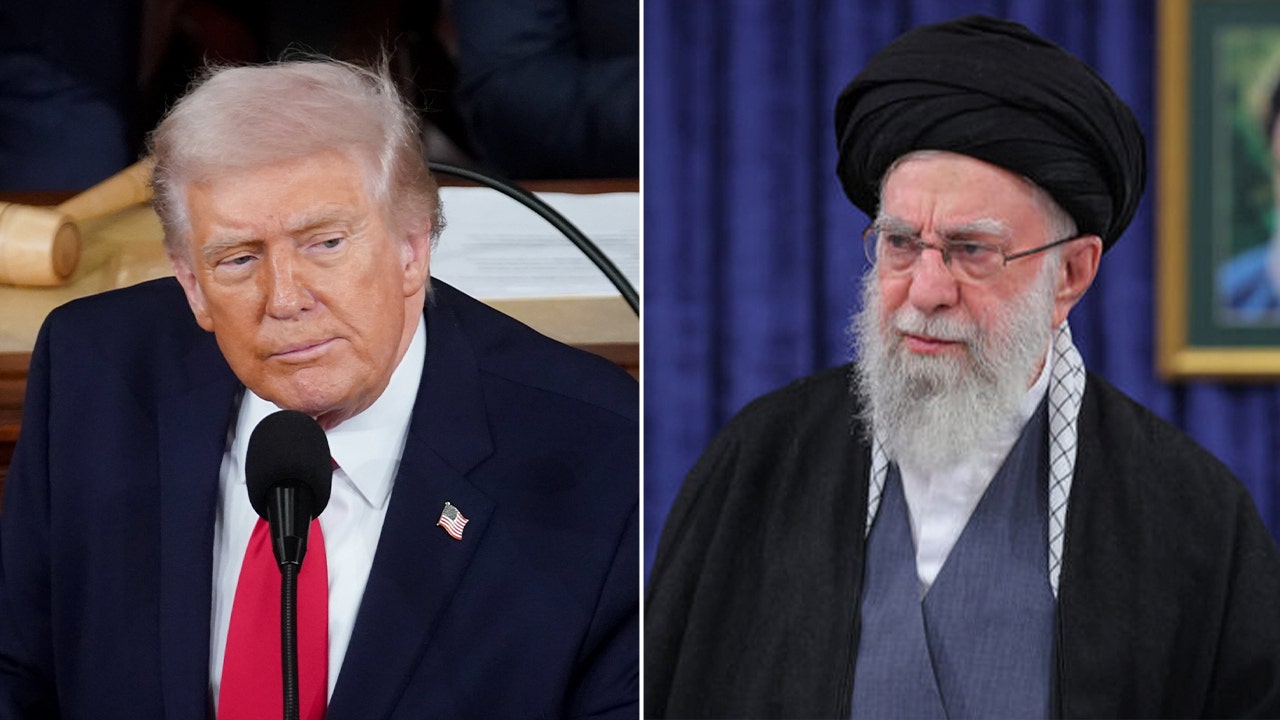
NEWNow you can listen to Fox News articles!
New information from Iran's top diplomat about the strike that killed Supreme Leader Ali Khamenei provides some of the clearest evidence yet of the precision and strategy of the US-Israeli joint operation that launched Operation Epic Fury, counterterrorism experts said Sunday.
The account, revealed by Iranian Foreign Minister Abbas Araghchi in a new television interview, also highlights what analysts describe as the defining feature of President Donald Trump's national security doctrine: using a decapitation strike against a hostile regime while at the same time creating an off-ramp to end the conflict.
“Well, the building we were sitting in was targeted, but the wing we were in remained intact while the other wing of the building was destroyed,” Araghchi said in an interview broadcast June 4 on the Lebanon-based, Hezbollah-backed Al Mayadeen television program.
While Araghchi survived the February 28 strike because he was in a different wing of Khamenei's compound during the attack, he went on to elaborate on how Khamenei was in his office and how others survived.
BEFORE AND AFTER SATELLITE IMAGES PROVIDE SNAP VIEW OF DAMAGE INSIDE IRAN
Iranian Foreign Minister Abbas Araghchi arrives at the government palace to meet with Lebanese Prime Minister Nawaf Salam in Beirut on Jan. 9, 2026. (Joseph Eid/AFP via Getty Images)
Reviewing the first part, counter-terrorism expert Dr. Omar Mohammed told Fox News Digital that Araghchi's account confirms that the work targeted a specific part of the building instead of softening the entire site.
“In the Arabic version, Araghchi says he was on the other side of the compound, telling another officer, his unit survived when the leader's office was destroyed,” explained Mohammed.
Araghchi also told the interviewer that he had an appointment that day with an official in the compound regarding the Geneva talks and that, based on the normal flow of work, Khamenei “should be present in his office.”
Mohammed, director of the Antisemitism Research Initiative at the Program on Extremism at George Washington University, added that if Araghchi's account is accurate, this was Iran's clear acknowledgment of US capabilities.
“They did not reduce the structure; they took one wing and left the other one next to it standing. That is the doctrine of President Trump all in one strike – he does not want a stay war, he wants to show that the United States can reach the center of a hostile state with precision and give it a way out,” said Mohammed.
MANY TOP IRANIAN GOVERNMENT OFFICIALS, SUPREME LEADER KILLED IN ISRAELI ATTACKS
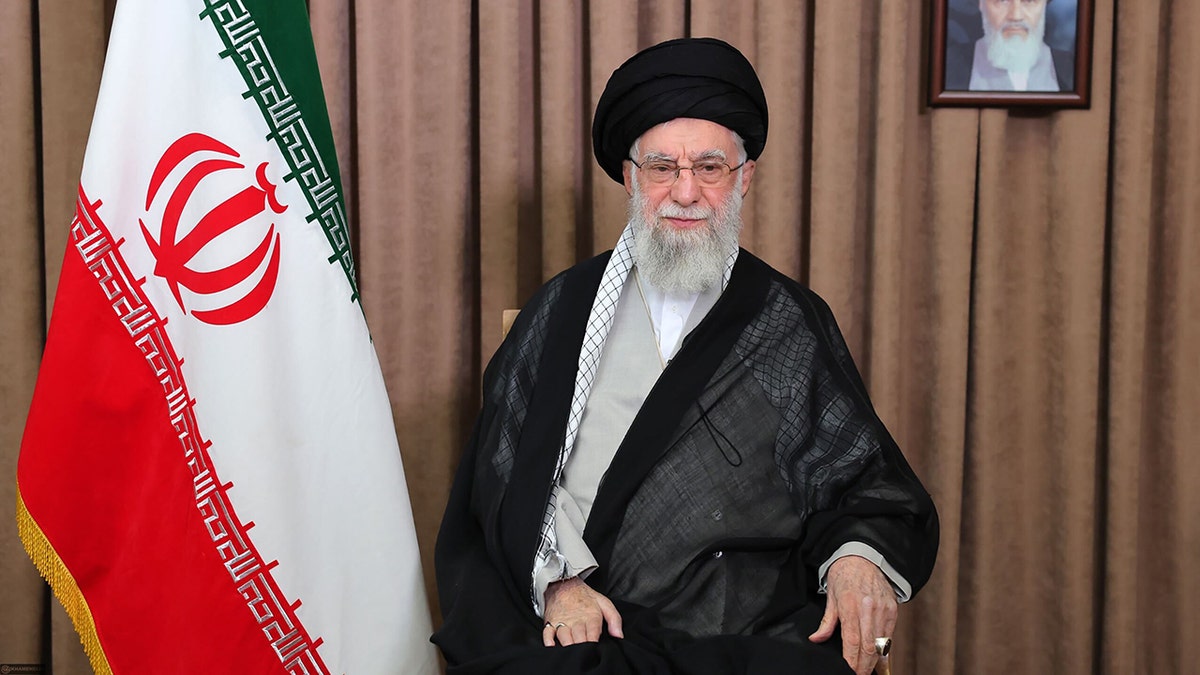
Iranian Supreme Leader Ali Khamenei addresses the nation on state television in Tehran on June 18, 2025. (Office of the Supreme Leader of Iran/Getty Images)
The midday strike on Khamenei's compound was carried out by Israeli warplanes targeting the area with 30 precision-guided munitions alongside Sparrow's air-launched missiles.
Military officials confirmed that the direct strike sequence killed Khamenei, 86, along with Defense Minister Amir Nasirzadeh, IRGC Commander Mohammed Pakpour and several top security leaders.
Trump confirmed US involvement in the assassination of Khamenei in a post posted on social media at the time.
“He could not evade our intelligence and our sophisticated tracking systems, and, working with Israel, there was nothing he or the other leaders killed with him could have done,” the president wrote.
“Iran was given the clearest message any enemy can get – we can reach your leader in his office, this is the way,” Mohammed commented. “The rational world is leaving. Tehran did the opposite. It fired at Israel, killed a citizen in Bahrain, attacked Kuwait, Qatar and the United Arab Emirates, closed the Strait of Hormuz, created a global energy crisis. The surgical strike was American. The war that followed for many months was Iran's decision.”
After the leadership change, Ali Khamenei's son, Mojtaba Khamenei, became the new supreme leader of Iran.
IRAN'S NEW LEADER IS 'DROPPED ON STEROIDS,' EXPERTS WARN OF HARDLINE LAW
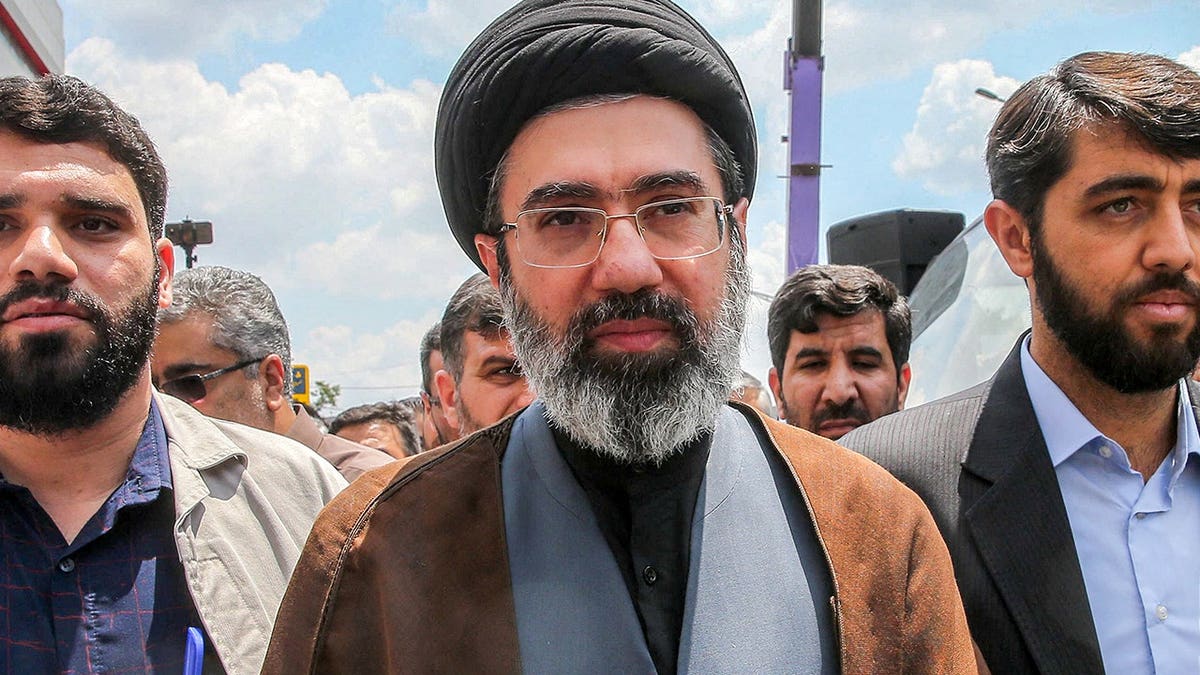
In this photo obtained by Iran's ISNA news agency, Mojtaba Khamenei (C), son of Iran's supreme leader Ayatollah Ali Khamenei, walks down a street in Tehran on May 31, 2019. (Hamid FOROUTAN / ISNA / AFP via Getty Images)
He has been involved in back-to-back negotiations with the US while maintaining a neutral public stance.
“In Arabic, Araghchi calls the new leader 'young Khamenei instead of old Khamenei.' That is the language of the monarchy, not the republic of the clergy,” said Mohammed. “They rewrote theology in the air to fit a son who lacked religious status, who was injured in the same strike and disappeared for weeks. The revolution that began in power by abolishing the monarchy transfers the throne from father to son.”
CLICK HERE TO DOWNLOAD THE FOX NEWS PROGRAM
“The real issue is not that Iran is strong,” Mohammed continued. “The accuracy of American power was shown and the door was opened, and he chose to expand the war instead.”