A controversial billionaire tax proposal has been declared eligible for the November ballot

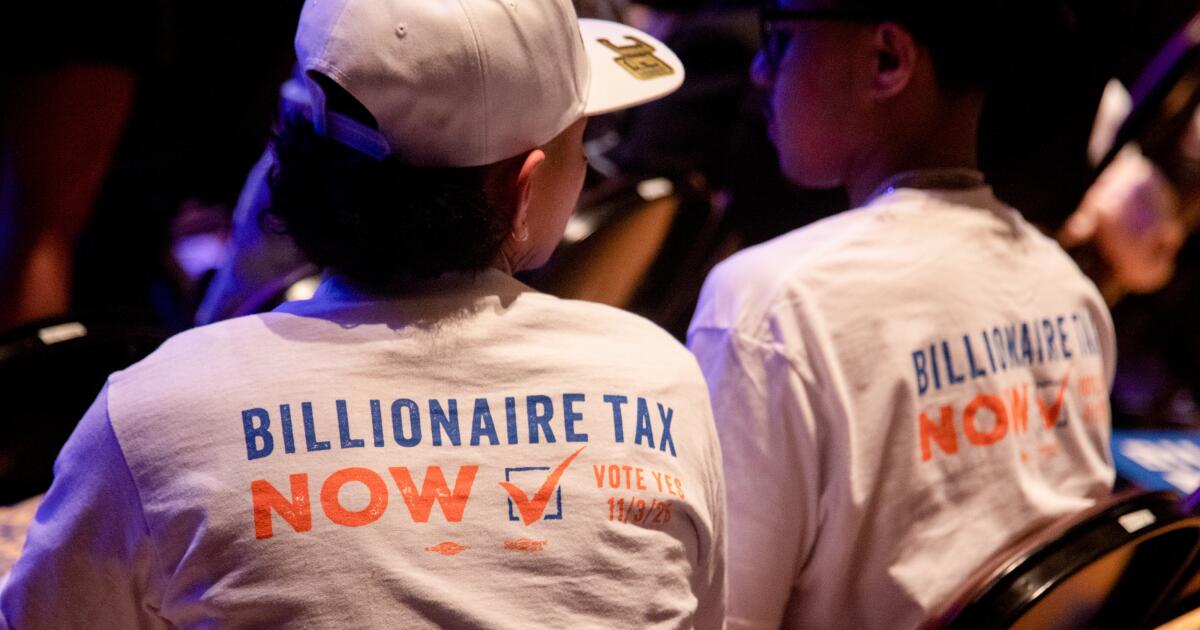
A controversial proposal to tax California's billionaires to fund health care has qualified for the November ballot, setting the stage for a fierce and costly battle over whether the state should crack down on the super-rich.
Supporters say the proposed tax is necessary to offset health care funding cuts, approved by President Trump and the Republican-controlled Congress, that will hurt millions of the most vulnerable citizens.
In April, supporters of the billionaire tax submitted nearly 1.6 million signatures, nearly double the amount needed to qualify. The California secretary of state announced on Wednesday that enough signatures had been submitted. The plan will be officially eligible for voting on Nov. 3 on June 25 unless the promoters cancel it in advance.
The plan would impose a one-time tax of up to 5% on taxpayers and trusts with assets worth more than $1 billion, with some exceptions, such as real estate. The tax can be paid within five years. Ninety percent of the revenue will fund health care programs, and the remainder will be used for food aid and education programs. The proposal would cost the state's wealthiest citizens $100 billion if a majority of voters support it.
Opponents of the measure say the proposal is a failed attempt to address the long-term effects of health care cuts and will destroy California's economy and budget.
The state budget in California already depends heavily on income taxes paid by high earners. As a result, income tends to fluctuate, depends on capital gains, bonuses to executives and wind-outs from new stock issuances, and is notoriously difficult for the government to predict.
The proposal has already sparked heated debate, highlighting the divide between rich and poor in an increasingly expensive state.
The Service Employees International Union-United Healthcare Workers West and other supporters of the billionaire tax say it would raise $100 billion, reversing cuts to federal health care and education funding and federal food assistance.
But supporters face strong opposition from billionaires with deep pockets. Tech executives and other business leaders oppose the idea and threaten to move to other states. Opponents say the multibillion-dollar tax would hurt California's economy while not addressing fiscal problems.
The proposal has also divided politicians within the Democratic Party. California Gov. Gavin Newsom has spoken out against the billionaire tax, expressing fear that billionaires will leave the state. But American lawmakers like California Rep. Ro Khanna and Sen. Bernie Sanders has supported the billionaire tax, saying the wealthy should pay their fair share to fund essential services.
Business leaders have already poured millions of dollars into groups that oppose the billionaire tax or advocate for other solutions to wealth inequality.
Tech executives, venture capitalists and business leaders have donated nearly $118 million to the nonprofit Building a Better California, according to data on the secretary of state's website. Most of the funding comes from Google founder Sergey Brin, who has given more than $82 million to the group. Executives from DoorDash, Ripple, Stripe and other companies also contributed.
The group says it supports goals such as increasing access to affordable housing, protecting innovation, requiring more transparent government and securing more stable education funding.
PayPal and Palantir founder Peter Thiel donated $3 million to the California Business Roundtable, which opposes the tax. Former Google Chief Executive Officer Eric Schmidt donated $1 million to that group as well.
California could collect tens of billions of dollars in wealth tax if it passes, but it could also lose more tax revenue, said a December letter from the state legislative analyst's office. The office also said that it is difficult to predict the exact amount the country will collect due to factors that can affect the billionaire's wealth such as stock price fluctuations.
California billionaires who were state residents as of Jan. 1 they will be affected by the voting measure if it passes. Some wealthy citizens have announced plans to leave the country. On December 31, venture capitalist David Sacks announced that he was opening an office in Austin, Texas, the same day Thiel announced that his firm had opened a new office in Miami.