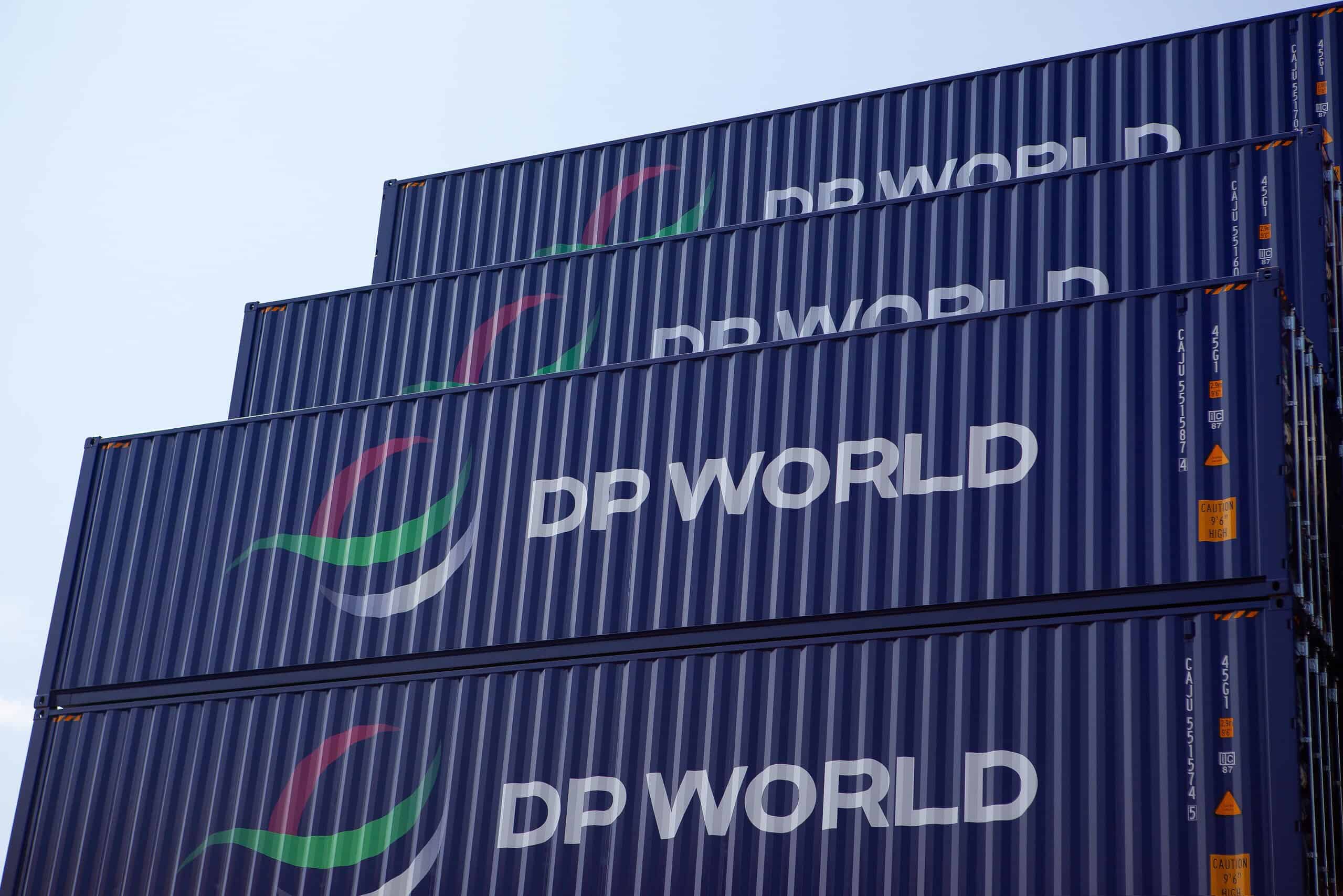
The case for financing the trade is DP World – a company that actually transports goods.
Since joining DP World in 2021, Sinan Ozcan has built a trade finance business from the ground up among the world's largest logistics providers – a company that has grown to more than 120,000 employees from 56,000 at the time.
By embedding finance directly into commodity transactions, DP World can verify assets in real time, detect fraud, and increase capital for customers that traditional banks ignore.
In this interview, Ozcan, CEO and board director at DP World Trade Finance, explains how that model works – and where it's headed next.
Global Finance: How have recent events in the MENA region affected your performance?
Sinan Ozcan: Our global network and integrated end-to-end logistics model continue to provide resilience and flexibility across the region. The ports are still operational, and we have greatly increased our inland shipping capacity. We provide integrated corridors from port to inland locations, 24/7 tracking, and prioritize important cargo. Trade finance is an integral part of our global strategy to provide our clients with a single trade management solution. DP World Trade finance continues to support existing and new customers. We are fully operational in our lending business.
GF: What are some of the lessons learned from the Gulf crisis?
Ozcan: It actually confirmed the validity of our strategy. A few years ago, our customers were shipping lines, and our revenue came mostly from the port business. We realized that focusing trade finance on the supply chain was difficult for traditional banks to understand, but it was a huge opportunity for us. Today, we go beyond shipping lines, meaning we deal with warehousing, forwarding, and shipping from the factory to the customer's door. DP World basically handles the trade end-to-end and finds a logical route to the client. We are fast, fast, and fast.
GF: What was the original vision for DP World Trade Finance, and how has it evolved?
Ozcan: About 10 years ago, when DP World started its transformation journey, it became clear to us that global supply chains were fragile and this was affecting the overall trade. When I joined in 2021 to set up a trade finance business, DP World had 56,000 employees; today, we are over 120,000.
It's a big change happening all over the world. In the last two and a half years, we have also acquired several companies and opened more than 200 shipping and forwarding offices, worldwide.
That change required understanding the primary customers: the companies that actually produce, trade, sell, and sell the goods, what we call the owners of the goods. So firstly, when your client's domain changes from shipping lines to stockholders, it requires a lot of movement from the factory floor to the customer's door.
But even that was not enough, because when we ask our customers, How can we help you more? They cited infrastructure and access to finance as their biggest challenges. That's how we decided to start our own financial business. We wanted to do it differently: by understanding where the gaps are, creating solutions and making trade finance more inclusive and transparent.
GF: What risk is underestimated, and how do you see it?
Ozcan: The usual banking method is to look at the balance sheets, but we think the biggest risk in trade is fraud and collusion. It is not entirely clear to the banks what is happening on the trade route. For example, you have a buyer and a seller, but are they really exchanging goods? Do they really trade each other or do they work together? That is a big risk. To remove that risk, we embed trade finance in logistics and supply chain. We link cash flow as much as possible to asset flow.
If you are a banker today, you will receive a bill of lading—a shipping document—which should be proof of the trade you sponsored. But it can be fake, fake, lost, you name it. That creates a lot of uncertainty.
As a global logistics provider, we have visibility over 90% of global container movements in real time. If we receive a bill of lading, whether we are in possession of the goods or not, we can confirm that the goods are there and track them. That gives us greater visibility and transparency to reduce the risk of fraud and collusion.
GF: So how do you take risk in financial trading?
Ozcan: There is also a misunderstanding of trade finance as a very risky asset class. That's because traditional banking methods can't tell the good apples from the bad, and they use heavy collateral across the board. But a company cannot have unlimited security if it wants to continue to grow. For that, we have created a trade finance solution that allows us to manage assets, collateralize them, and, instead of asking for fixed asset loans, collateralize the trade itself.
Another way to de-risk is to look not only at that balance sheet or profit and loss statement – which is a piece of paper that can, again, be faked, forged, or lost – but the trading data. We can guarantee anything we see on a prospective borrower's balance sheet. And we can establish patterns in those trades, which greatly help us document risk.
GF: How do you see the world trade changing?
Ozcan: I believe that trade is like a living creature that wants to be freed, so we will find a way no matter what, because people will always need goods. But in recent years, there has been more protectionism, more regionalization, and changes in supply chains. We also see that offshoring is gradually being replaced by nearshoring or friendhoring. There is a general shift towards the separation of procurement and production sources.
GF: Which trade finance products have the best growth opportunities?
Ozcan: There are many trade finance products, but when you talk to a client's CFO, it only helps them if you really solve their problems. At DP World, we strive to provide unexpected solutions: it may be a variation of an existing product, such as a reduced invoice; a combination of pre-shipment investment and post-shipment receivables; or permission or a combination thereof.
For example, you may have a client in the United Arab Emirates (UAE) who is very well-banked, and you may think that they will not need money, but in reality everyone does. Businesses want to grow.
Maybe that client wants to set up overseas offices. If it chooses to set up in the US, local banks in North America will not see the potential of the company in the UAE and treat it like any other North American startup. Banks in the UAE will have no visibility into the operations and services of the North American client subsidiary and will refrain from financing it.
In this model, our ability to view global logistics enables the financing of a parent company in the UAE and its North American subsidiary. What we do looks very different from the old bank. We offer standard products, but ultimately, we're trying to find solutions to big problems, rather than just being another bank on the block.
GF: How do you see DP World Trade Finance developing?
Ozcan: I find what we have done amazing, but I foresee what we will do in the next five years be revolutionary. Area expansion is on the way. We are planning for the UK, Australia, Hong Kong, Latin America, and, hopefully, North America.
We also plan to create more embedded trade finance solutions for various trade and transportation scenarios. It will be a simple yet highly organized tool to help our customers get their goods to their destination quickly and cost-effectively. Finally, we will continue to expand our cooperation with other financial institutions.
We don't plan to be another big bank; It's never just about borrowing money. Rather, it is about supporting global trade and providing the lifeblood of trade: access to capital. And for that, we will continue to work with other banks, financial institutions, trade funds, and non-bank financial companies. We will be doing more risk participation deals on a funded and unfunded basis, and we will be adding more originations to distribution.