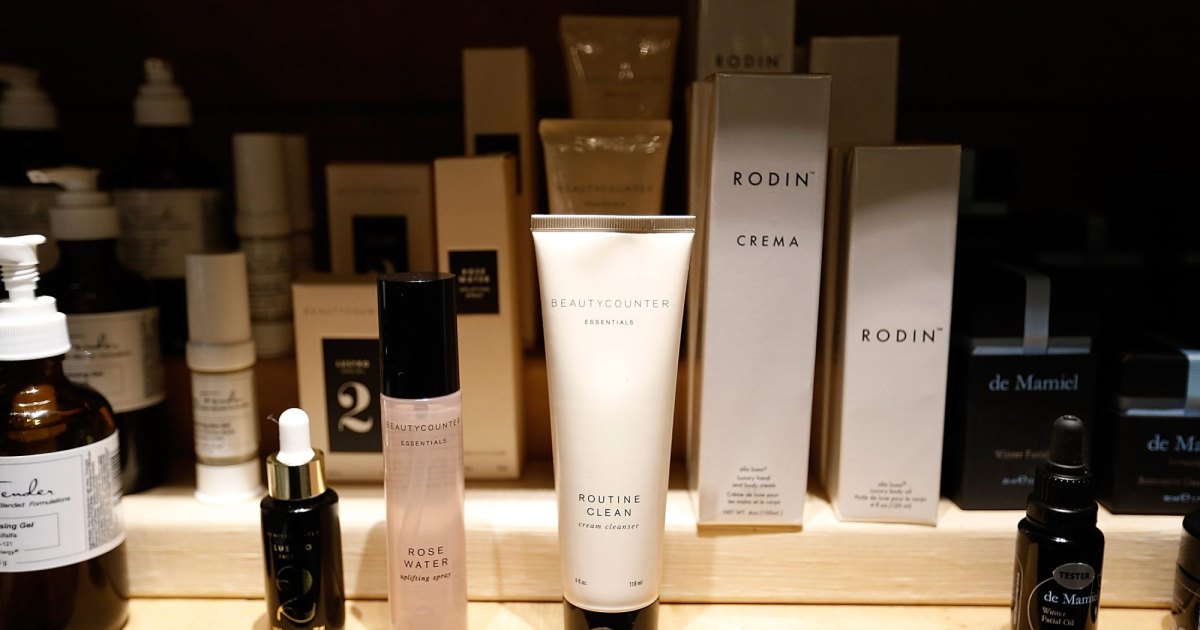
Clean beauty has taught people to question what they are putting on their skin. Now that same thinking is moving from the bathroom to the kitchen cabinet.
For years, beauty consumers have been trained to look at beautiful packaging and ask the hard questions: What's in this product? Is it safe? Is it better for the environment? Do the words “natural,” “pure” and “toxic” have meaning – or just marketing?
Those same questions are now being asked about non-toxic and nonstick frying pans.
What is the Clean Beauty Movement?
Clean beauty generally refers to skin care products that are formulated without ingredients that are considered harmful to human health or the environment. According to Harvard Health, ingredients commonly avoided in clean beauty tend to fall into three groups: irritants or allergens, potential endocrine disruptors and potential carcinogens.
That concern has helped popularize beauty labels such as non-toxic, vegan, cruelty-free, green, natural, organic, sustainable and biodynamic. The goal is simple: cleaner alternatives that feel better for people and the planet.
But clean beauty always has one big problem: there is no clear organizational standard for what “clean” actually means. Every company can define it differently, which means that the label is often self-regulated.
That confusion is made worse by outdated oversight. Federal cosmetics laws are nearly 90 years old, and the FDA lists only 11 ingredients in its “Prohibited & Restricted Ingredients in Cosmetics,” compared to 500 in Canada and 1,600 in Europe.
Still, clean beauty is changing the way people shop. Teach consumers to read labels, question vague claims and think critically about everyday exposure.
The Kitchen Has Its Moment of Pure Beauty
Non-toxic cookware follows a similar pattern.
In cookware, “non-toxic” often means pans made without chemicals linked to health or environmental concerns, especially PFAS – the “permanent chemicals” found in some traditional unlabeled cookware. For decades, nonstick cookware dominated kitchens because Teflon, or PTFE, made cooking and cleaning easier.
But consumers are now paying more attention to what happens when coatings wear, scratch or overheat. Inhaling fumes from heating nonstick cookware can cause flu-like symptoms known as Teflon flu. The growing awareness of PFAS has pushed alternatives such as ceramic, stainless steel, stainless steel and carbon steel into the spotlight.
The problem is that cookware has the same label problem as beauty. There is no federal law that defines “non-toxic” cookware, so brands can use the term freely. A pan labeled “PFAS-free,” “PTFE-free” or “ceramic-coated” may sound reassuring, but those claims don't always mean the same thing.
This is where reading labels is important. “Avoiding products made with PFAS, including pots and pans, can help protect your health and the environment,” Eric BoringPhD, told Consumer Reports. He added that consumers trying to avoid PFAS in non-stick cookware may want to focus on products that claim to be PTFE-free.
Is 'Non-Toxic' Cookware the New 'Natural' Skincare?
In many ways, yes. Consumers are scrutinizing PTFE, PFOA and permanent chemicals in pans the way clean beauty shoppers were skeptical of parabens and phthalates in skin care.
Both movements are driven by health culture, social media, environmental concerns and distrust of products that are considered safe until proven otherwise. Both also show how a useful idea can turn into a confusing sales pitch.
There is one important difference: PFAS regulation is intensive. PFOA, a chemical once used to make Teflon, was phased out in the United States in 2015. Mark Ruffalo helped bring that history to broadcast audiences in the 2019 film “Dark Water,” which followed a lawyer investigating PFOA contamination of public water supplies.

When California lawmakers tried to end the chemical forever with Senate Bill 682, the debate quickly turned into a celebrity feud. Rachael Ray has publicly defended unfinished modern cookware, saying the products are safe and essential for home cooks. But his comments drew criticism from Mark Ruffalo, who has become one of Hollywood's most prolific singers […]
But Teflon, or PTFE, is still part of the PFAS family. According to USA Today, states including Minnesota, Maine, Connecticut, Rhode Island and Colorado have passed laws banning PFAS from cookware.
California tried to do the same, but Gov. Gavin Newsom he did not sign this bill after the famous chefs Rachael Ray, David Chang again Thomas Kellerwith nonstick cookware lines, protect the use of PFAS in cookware. Ruffalo, known for his environmental work, criticized Ray for opposing the bill.
Does the Perfect Pan Exist or Exist?
Like pure beauty, non-toxic cookware gets more complicated the deeper you go. Critics of clean beauty point out that there is not enough scientific evidence to prove that “clean” ingredients are safe or that avoided ingredients are always harmful.


The cookware has the same gray area. There is not enough evidence to prove that Teflon, if used properly, is harmful. According to WebMD, PTFE particles may scratch cookware with a Teflon coating, but do not cause damage if ingested.
The main problem is that many people do not use cookware properly, while many non-toxic methods are too expensive or difficult to cook. That makes the “perfect pan” nearly impossible.
The best middle ground: understand the label, use the right pan for the right job and avoid treating “non-toxic” as a magic word. Pure beauty has taught consumers to question their serums. Now it's teaching them to question their abilities, too.