Transcript: New York Gov. Kathy Hochul on “Face the Nation with Margaret Brennan,” July 19, 2026

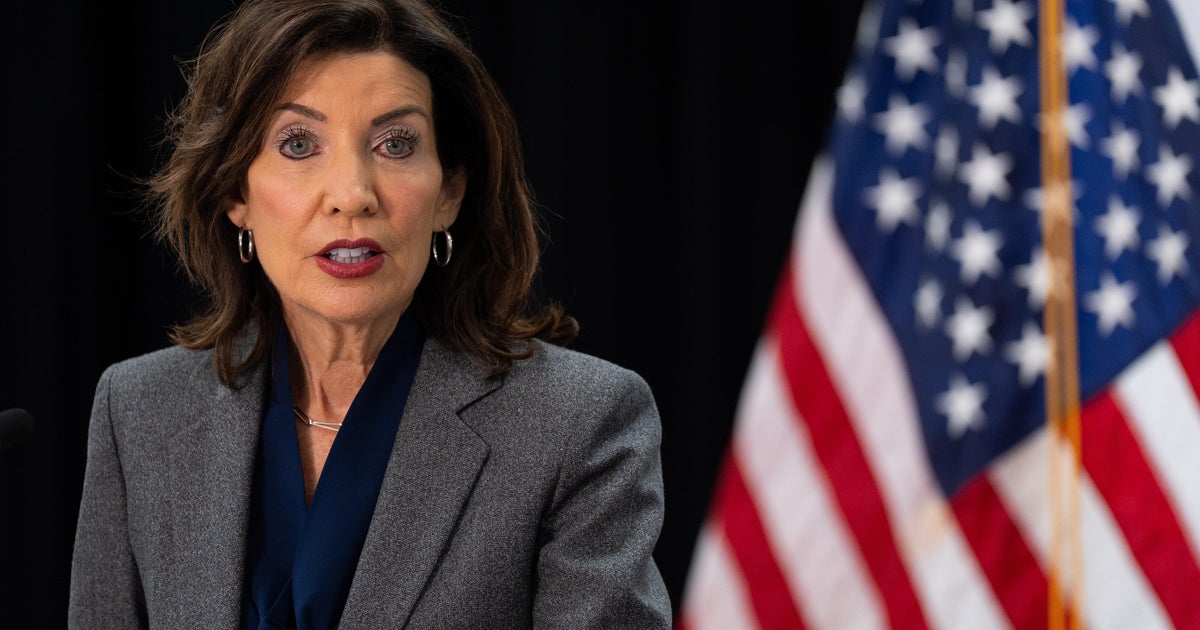
The following is the text of the interview with Gov. Kathy Hochul of New York, a Democrat, aired on “Face the Nation with Margaret Brennan” on July 19, 2026.
MARGARET BRENNAN: Welcome back to Face the Nation. Now we go to the Governor of New York, Kathy Hochul. Hello, Governor.
GOV. KATHY HOCHUL: Hello.
MARGARET BRENNAN: You have a big day, the World Cup final near New Jersey. I know you will go to them. So is the President of the United States, the President of Mexico, the Prime Minister of Canada. Given the dangerous situation, are you confident in the safety measures?
GOV. HOCHUL: Of course. We worked very closely with our federal, state, and local law enforcement partners. We have been preparing for this for over a year, over 1,000 tests, looking at all scenarios. So, we are with the best, and especially with the NYPD, the greatest police force in the world. I feel very confident in our security, and we are very happy to welcome the eyes of the world. The whole planet will be watching what is happening here in New York City. So, it's an exciting, very exciting time for us.
MARGARET BRENNAN: Indeed, billions are watching, and we will be. Governor, I want to ask you about a decision you made this past week that made the headlines. He signed an executive order to block large data centers for a year. These are those giant buildings that help power artificial intelligence technology centers. It was a few months ago that he said data centers were a local decision for municipalities. What- what has changed for you?
GOV. HOCHUL: I would say what changed was talking to the local people and seeing that they don't have the ability to negotiate or they don't have the authority to demand that their communities benefit from this in an amazing way. And they don't have the ability to insist that these companies deliver their own power, or pay more to the grid. They don't have the ability to refuse the tax break, so I decided I could do more, especially in the and especially the four floods are what's happening now. We have over 30 applicants, so in a very short period of time, I changed my position, I said, “You know what? The state has to take the lead here, but it's not about being the first. It's about being the first to fix it.” And we will fix it during the year and help those areas to negotiate properly, make sure that we keep a record of how much water is used, we do research on that during the year, but we also emphasize that these companies, and they are welcome with the conditions and rules that we have set, to also contribute to the main grid because this is a big tax on our grid. And I want to make sure that the potential is there – the unlimited potential is there for the big companies that create jobs, like Micron that we employ here with 50,000 jobs. So we will find the right balance. But I will tell you this, people want protection. New Yorkers want protection. There are many concerns. Companies want certainty. We will give them both.
MARGARET BRENNAN: Well, governors from red states like Missouri, Montana, Wyoming – they've signed this White House Ratepayer Protection Pledge, which I think we have AI data centers sign to – promise not to raise consumer rates, like AI companies – OpenAI, and Amazon says they'll help cover infrastructure development costs. Have you talked to companies, these companies, about doing the same in New York? Why is the White House pledge so inadequate?
GOV. HOCHUL: Asking these companies to keep their word on how much they're going to spend – I'm more reasonable than that. I'm probably willing to say I'll get it right in New York. We will work with companies, but also- and we are open to AI. Indeed, this is a place where innovation is welcomed and celebrated. But my opinion is, if you're going to succeed in New York because of our talent and our resources and our people. I want to make sure that New Yorkers succeed too. So it's not a one-way street. I don't want companies to come and tell us how to do things in our state.
MARGARET BRENNAN: Yes.
GOV. HOCHUL: But they might- they would be welcome. When I lay down the rules of the road war world, they will accept them. I mean, once they can play the game, do things in New York, they'll want to come, but I need some breathing room. So my institutions, I have seven bodies dedicated to different aspects of this: the benefits of economic development in communities, how we manage how much water is going to consume–
MARGARET BRENNAN: Yes.
GOV. HOCHUL: –how do we make sure that- I mean, just to say, make sure that the taxpayers don't pay more. How do you do that? I am more realistic. I want to do things and make them really successful.
MARGARET BRENNAN: It sounds like you're looking for evidence to help you get to yes. But right now, you hear concerns from unions, for example, that this will drive away jobs and will send a signal that New York is not a place for long-term investment companies. How do you look at that?
GOV. HOCHUL: Well, that's not the right end of what I did, it's quite clear. And as the man who created more union jobs in this state than anyone in history, the largest private sector development in American history is underway right now with this Micron. That's 20 years of union work building this. We also had tens of thousands of union jobs during the years of building the Gateway Tunnel, which was built, stuck, impossible until I launched it. So I got more jobs for union members. They should not worry about my commitment to their work. But wouldn't they choose to create jobs so that there will be jobs left after the construction period is over? That the project is built, that we actually have people, their neighbors, communities, people who actually work in those buildings with long-term well-paying jobs, not just focusing on construction, is very important. So, I'm asking everyone to take a breath. This is not the end of the world. We're going to get through this, and New York always leads in a smart way, and that's what I'm proud of what we're doing here.
MARGARET BRENNAN: I want to ask you about election security. We are almost 100 days away from election day. States run elections in this country, not the federal government. Are you getting the kind of election security services your country has had for the past few years? Do you have something you need?
GOV. HOCHUL: No, the federal government has been tearing down all the safeguards we rely on to protect this core of our democracy. The knowledge that when you vote, you have that right as a citizen, that responsibility to decide who our leaders are, that it doesn't change. It's not being challenged by the federal government, just because they're too worried about the consequences, that's exactly what's happening. I want everyone to focus on that. Yes, we passed the John's Voting Rights Act. We have the strongest safeguards in the country, and recently, I signed a law, many, many safeguards on what ICE does, to say that ICE agents can't show up at polling places.
MARGARET BRENNAN: Right.
GOV. HOCHUL: Do you see this situation? Black and brown communities across our country and in New York, where they suddenly come out on election day to create that fear and terror thing that they're so good at. I don't want to see that undermine the legitimacy of our elections. So, what Donald Trump is doing right now is throwing out the biggest red herring you've ever seen and asking what are the real consequences. So, we are working hard on this here. I'll make sure we're safe, but I can't rely on —
MARGARET BRENNAN: But–
GOV. HOCHUL: – the federal government about anything – anything these days because it's at risk.
MARGARET BRENNAN: Under federal law, armed agents are not supposed to be in election centers. Attorney general-elect Todd Blanche has said he will follow the law, but it sounds like he's still worried that might happen. You have–
GOV. HOCHUL: They don't follow the law at all, Margaret. They don't follow the law at all. So again, trust but verify. I will make sure and make sure that New York State does it right. I don't expect them to say this because what happens is, they say the next day, like, “Well, we didn't mean to do it.” And, “Oh, I'm sorry about that.” You know, these are the people who go around killing people on our streets, so they don't believe me when they say something.
MARGARET BRENNAN: We'll be talking to the White House about this very soon. Thank you very much, Governor. We will be right back.