NATO allies welcome Trump's Polish military announcement, but say the messages are “quite confusing”

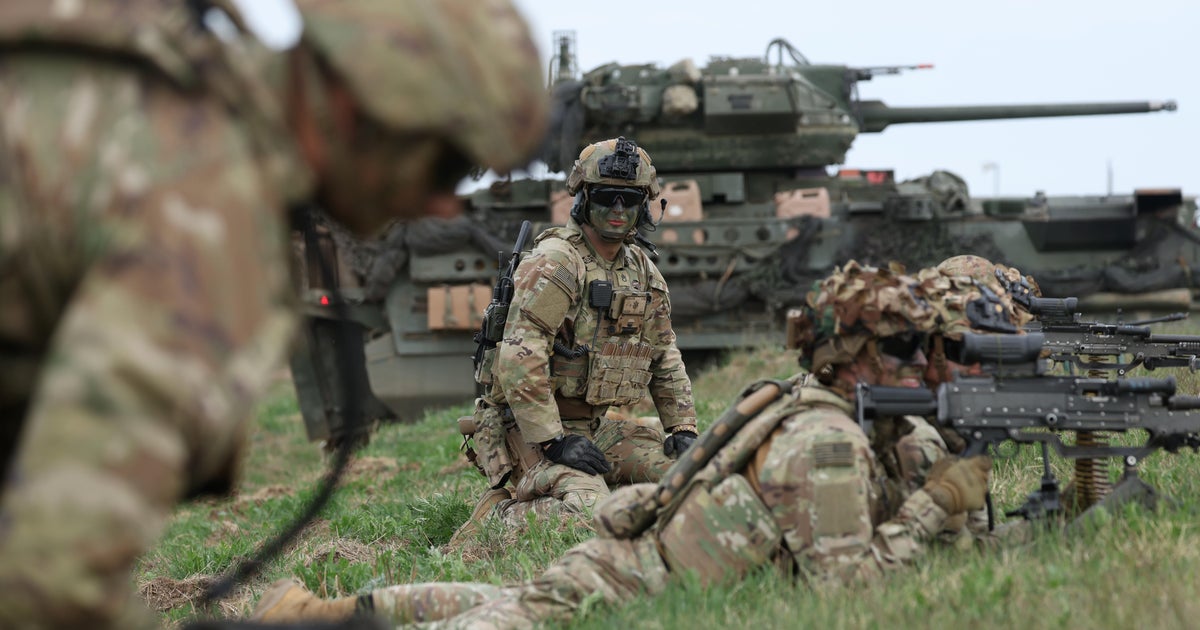
London – US NATO supporters were left scratching their heads on Friday after President Trump announced he would send US troops to Poland, reversing a decision to withdraw from the plan, with one European foreign minister calling the administration's messages “absolutely confusing.”
On Thursday, Mr. Trump said in a Truth Social letter that he was “pleased to announce that the United States will send an additional 5,000 troops to Poland.”
It was not clear whether the soldiers would be staying in the country permanently or on a rotating basis.
His statement came two days after Vice President JD Vance defended the previously announced decision to cancel the deployment of 4,000 troops to Poland, saying the country is “capable of defending itself with substantial support from the United States.”
Vance accused the media of “overreacting” to “something so small.”
Sean Gallup/Getty
At Friday's meeting in Sweden of NATO ministers, including US Secretary of State Marco Rubio, European leaders welcomed Mr. Mr. Trump and his cabinet have angered NATO members by refusing to join the anti-Iran campaign launched by the US and Israel nearly three months ago.
“All's well that ends well,” Polish Foreign Minister Radosław Sikorski said on Friday.
His Swedish counterpart, Maria Malmer Stenergard, was blunt, telling reporters that America's position on joint defense under the nearly eighty-year-old transatlantic alliance, “is really confusing, and it's not always easy to navigate.”
“Maybe discussions on social media are not the best thing,” he added.
NATO leaders will meet again next week at a summit in Ankara, Turkey, but European allies are likely to push Rubio to clarify the US's shift in military deployments as they meet Friday in Sweden.
Rubio is expected to speak at a rally later on Friday and discuss the deployment of US troops to the region.
He said on Friday that any reduction in US troop deployments “is not punitive,” but added that “Mr. Trump's views – the frank humiliation – of some of our NATO allies and their reaction to our operations in the Middle East … will have to be addressed.”
Christoph Soeder/images association/Getty 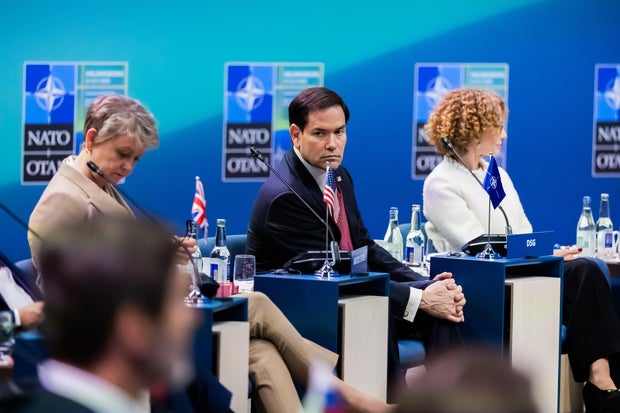
He added that the problem “will not be solved or resolved today,” and said, like any alliance, “it should be good for everyone involved.”
Europeans have “heard the message”
Mr. Trump announced the surprise deployment to Poland nearly three weeks after the US was “studying and reviewing the possibility. reducing the Army in Germany,” following a public disagreement with Chancellor Friedrich Merz, who said the president had been “humiliated” by Iranian negotiators.
Senior US defense officials told CBS News the next day that the Pentagon was there plans to withdraw about 5,000 American troops from Germany.
Mr. Trump said again is considering withdrawing the US from the alliance that it helped to find after World War II, and after his administration pushed to take over Greenlandautonomous region of NATO ally Denmark, earlier this year.
Under intense pressure from the White House, some NATO allies have tried to show that they are increasing defense spending. Last year, for the first time, a European ally – Norway – spent more money than the US in its war, according to the Atlantic Council.
At next week's conference in Ankara, European leaders will be keen to show they have made good on promises to raise funds and shoulder greater responsibility for the continent's defense.
A number of arms deals are yet to come from the president, diplomats told AFP this week. Some NATO allies, led by France and Britain, have already sent warships to the region to take part in the international mission to help ensure the safe passage of ships in the Strait of Hormuz, but that mission is still under attack, and the Europeans have made it clear that they will only start after the end of the war.
Nevertheless, “European partners have heard the message” from Washington, NATO Secretary General Mark Rutte recently.
A chance to “make a European NATO”?
NATO ministers are still expecting a decline in US power on the continent as the Trump administration pursues its “America First” agenda.
“The important thing is that it happens in an orderly way,” said Norwegian Foreign Minister Espen Barth Eide on Friday in Sweden. “So that Europe can build where the US is reducing its presence.”
“As the US reconsiders the level of cooperation and its presence in Europe within the alliance, it is precisely the opportunity … to make a European NATO,” said the French diplomat Jean-Noel Barrot.
The continent's democracy and defense capabilities have been tested by Russia's full-scale invasion of Ukraine. Rutte pressured European countries to buy more weapons from the US to supply Kyiv.
Washington officials have accused NATO allies including France, Spain and Italy of shirking their obligations when it comes to defense spending.
“What I want to achieve is that the burden is spread equally, that there is more burden here,” said Rutte. “Right now, it's only six or seven partners doing the hard work.”
But there is no doubt that Europe would like to keep the US close.
Before a cabinet meeting on Tuesday, Polish Prime Minister Donald Tusk said his government is “trying to get information and influence the decisions of our American partners.”
Washington “must understand how important close and well-organized cooperation is from the point of view of the security of Poland, Europe, the United States and the global order, including the presence of American troops in Poland,” he said.
“We believe it is in the interest of the US to send people to Europe,” Lithuanian Foreign Minister Kęstutis Budrys said on Friday, calling it “a cheap way to keep the continent at peace.”