European Fighter Jet Project Begins to Collapse Amid Defense Industry Disputes

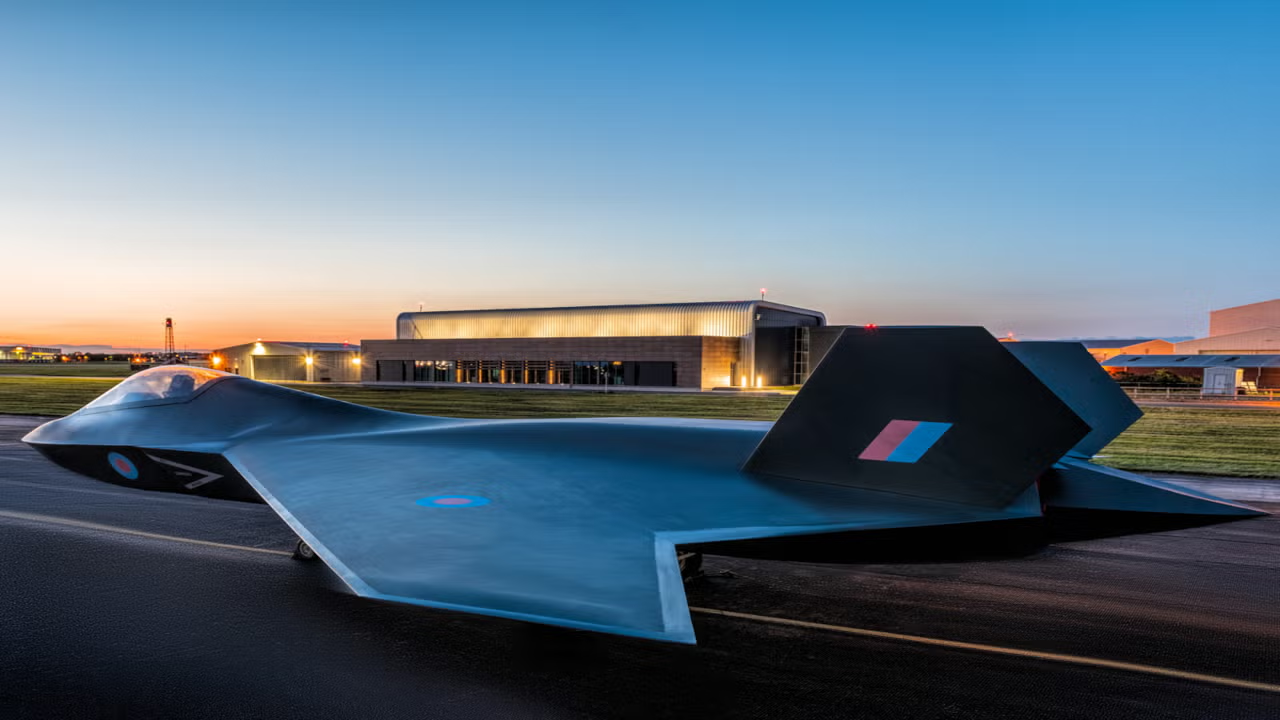
Europe's effort to build its own next-generation fighter jet system is beginning to crumble under industrial rivalries and political tensions, revealing how difficult it remains for the continent to coordinate major defense programs as governments increase military spending and seek independence.
Airbus defense chief Michael Schoellhorn said on Wednesday that the Future Combat Air System (FCAS) project will not fail completely, despite tensions between Airbus and France's Dassault Aviation over control of the system. Key parts of the program, including the “Combat Cloud” battlefield system and drone-linked Collaborative Combat Aircraft systems, will continue, he said.
The fact that Airbus now feels the need to publicly defend the system shows how much confidence around FCAS has waned.
The 100 billion project was supposed to be Europe's next-generation combat platform, integrating warplanes, drones, weapons systems and battlefield data into a single military network. Instead, it is increasingly turning into a virtual test of whether the European defense industry can really work as a unified system when commercial interests, national priorities and political influence start to collide.
Schoellhorn said there are currently “unbridgeable differences” between Airbus and Dassault, while the German and French defense ministries continue to try to find a way forward ahead of the Berlin ILA air show in June.
A number of options are reportedly being discussed behind the scenes, including separate military aircraft systems or other joint ventures. Germany, Schoellhorn admitted, could not create such a system on its own.
No one involved in FCAS wants to talk publicly about the failure yet. The problem is that Europe's biggest defensive players no longer seem to be fully aligned on what success looks like.
That is more important than military procurement schedules.
Governments across the region are accelerating defense budgets as security concerns grow and pressure mounts to reduce long-term dependence on foreign military systems. But the FCAS dispute shows how increased defense urgency can also intensify industrial competition between national champions competing for control, technology ownership and future export impact.
The disagreement is no longer just about engineering or aircraft construction. It is becoming a wider stress test of Europe's ability to coordinate key industries at a time when global instability is forcing governments to move quickly on security, manufacturing and defense strengthening.
Major international defense projects rely heavily on political trust, shared financing and long-term industrial cooperation between countries whose economic priorities are not always aligned. As more money flows into Europe's defense systems, those existing conflicts become harder to contain.
Parts of the FCAS may still survive. Drone systems and social media platforms are already becoming the backbone of future war planning. But if the core fighter program continues to fall apart, the collapse could reinforce broader concerns about Europe's ability to deliver a joint industrial strategy over time. increasing political instability.
The continent is trying to strengthen security because the world feels very dangerous and unpredictable. Difficulties now emerging within FCAS suggest that building shared systems across Europe may prove more difficult than raising defense spending alone.