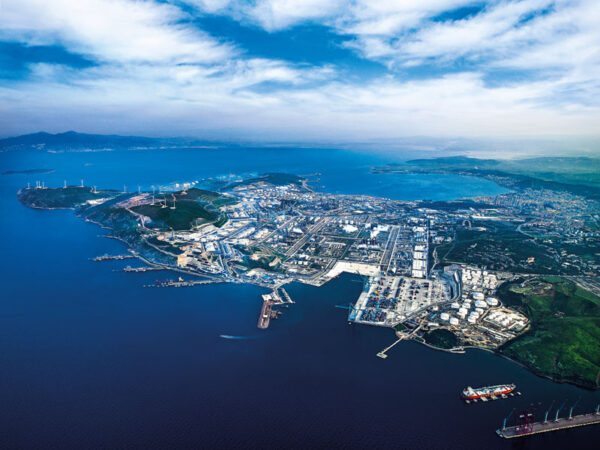
 
In today's dynamic macroeconomic environment, treasury functions are no longer limited to performing work or managing money. They have become financial regulatory institutions that have a direct impact on financial stability, funding strategy, risk management, capital allocation and long-term business sustainability. For SOCAR Türkiye, this change has been very important given the scale, complexity and integrated nature of its operations across the energy value chain.
As Türkiye's largest foreign direct investor, SOCAR Türkiye operates in a comprehensive group structure that includes more than 30 companies, including PETKİM, STAR Refinery, SOCAR Turkey Petrol Ticaret and SOCAR Turkey Depolama. Managing treasury operations across such a large and interconnected ecosystem requires not only operational discipline, but also strong visibility, reliable data, established controls and the ability to make quick decisions.
SOCAR Türkiye's wealth transformation was initiated to directly address these needs. Previously, financial processes related to treasury in all group companies were managed by separate and dynamic structures. Cash flow monitoring, transaction tracking and reporting activities were heavily dependent on manual processes, which created challenges for efficiency, accuracy, visibility and predictability. As transaction volumes increased and financial needs became more complex, it became clear that a centralized, automated and digital treasury infrastructure was essential.
The main objective of this change was to strengthen the financial stability of SOCAR Türkiye by improving financial visibility, strengthening the accuracy of financial forecasting, reducing operational risk and enabling effective management of financial and working capital needs. Treasury digitalisation was therefore not only positioned as a measure to improve performance, but as a strategic approach to financial sustainability and sustainable growth.
Building a revolution
The transformation is built around three main pillars: centralization, system integration and automation. First, treasury processes were strengthened under a centralized operating model, supported by a team of finance department experts responsible for overseeing the entire finance group. This has helped improve accountability, streamline workflow and create a clear view of capital and risk exposure across SOCAR Türkiye companies.
Second, SOCAR Türkiye implemented and integrated key digital treasury systems, including SAP TRM and SAP BPC, and internal dashboard structures. These systems enabled automated daily balance tracking, real-time cash flow reporting, instant domestic and international payment processing, and advanced monitoring of deposits, loans, bank limits, liquidity and risk metrics. As a result, managers have gained access to more timely and reliable financial information, supporting better-informed decisions in a fast-moving business environment.
Third, Robotic Process Automation is introduced to automate repetitive and overhead treasury processes. This was one of the most important milestones of the revolution. By using AI-backed RPA and system integration, manual entries have been significantly reduced, especially in areas such as FX transactions, deposits, letters of credit and company transfer requests. With Bloomberg integration, FX transactions can be automatically recorded in SAP TRM, improving both speed and accuracy.
These improvements reduced the burden of manual operations, reduced human error and improved transaction reliability across an annual transaction volume of approximately $22bn. These automation programs also result in more than 600 hours of labor savings, allowing treasury professionals to focus more on analytical, strategic and value-adding tasks instead of repetitive operational tasks.
Governance, visibility, decision making
Besides the efficiency benefits, the change creates a wider value for the organization. Near-real-time financial dashboards have strengthened management visibility and improved decision-making ability. Standardized digital workflows have improved internal controls, audit traceability and governance. Data quality improved as manual intervention decreased, while risk monitoring became more transparent and consistent across group companies.
The change also supported a stable work structure within the Treasury team by reducing overtime pressure and enabling staff to be used more effectively. In addition, the integration of e-signature processes has contributed to the sustainability journey of SOCAR Türkiye by reducing the use of paper and supporting environmentally responsible working methods.
What distinguishes SOCAR Türkiye's wealth transformation is not only the use of digital tools, but the way these tools are embedded in the group's formidable and comprehensive financial management framework. The infrastructure now supports centralized monitoring of more than 30 integrated companies and can be extended to newly established or acquired companies. This standardized and standardized approach ensures that treasury capabilities can be effectively replicated throughout the organization.
The treasury as a strategic value creator
For a capital intensive group, the ability to monitor liquidity, funding needs, risk exposure and financial positions in near real time is an important source of resilience.
SOCAR Türkiye's digital transformation has helped move the Ministry of Finance's function from a functional operational unit to an active strategic partner. By combining automation, integrated systems, data transparency and strong governance, the Ministry of Finance now plays a strong role in supporting financial stability, operational efficiency and long-term growth.
Finally, SOCAR Türkiye's experience shows that the transformation of digital wealth is not just about improving processes. It is about building a future-proof financial infrastructure that can support strategic agility, risk tolerance and sustainable value creation in an increasingly complex business environment.