Transcript: US Trade Representative Jamieson Greer on “Face the Nation with Margaret Brennan,” May 17, 2026

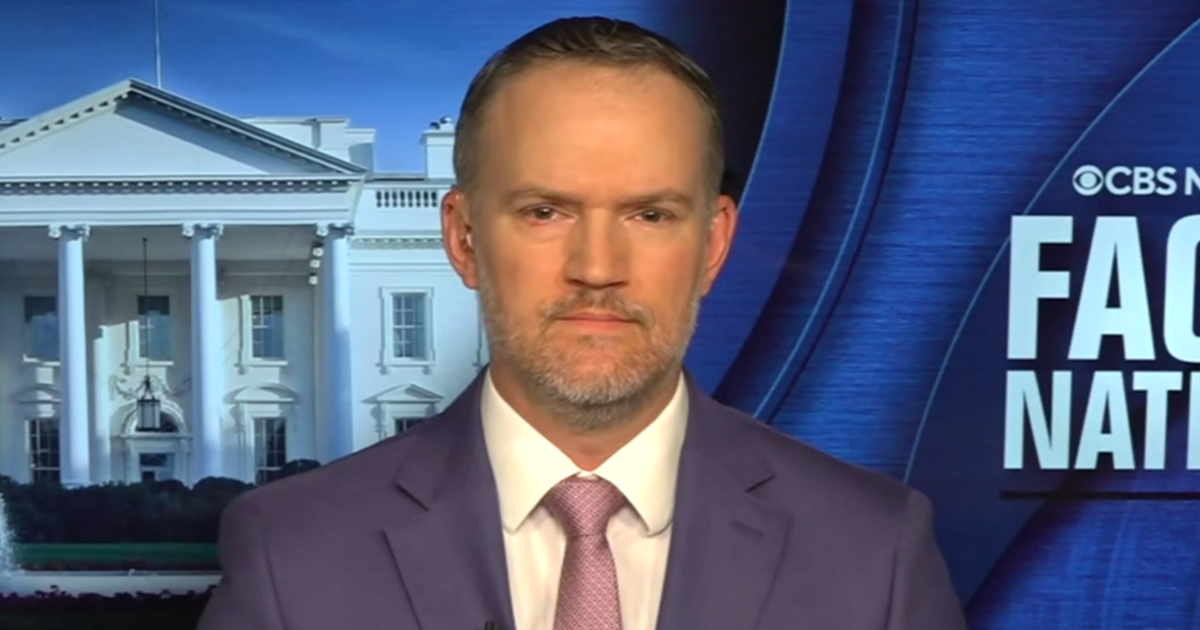
The following is the transcript of an interview with US Trade Representative Jamieson Greer that aired on “Face the Nation with Margaret Brennan” on May 17, 2026.
MARGARET BRENNAN: We start this morning with the top member of the president's economic team, United States Trade Representative Jamieson Greer. Hello, Ambassador.
JAMIESON GREER: Hello. It's good to be here.
MARGARET BRENNAN: It's not just about feelings. Gas is about $4.51 a gallon. Americans have spent $45 billion on fuel since the war began compared to a year ago. The stock market is up, but low-income Americans are pulling back on their spending. The New York Fed reports that families earning less than $125,000 a year are increasing their car loans less. How do you give relief to the average American?
JAMIESON GREER: Well, we know that nobody wants to see higher gas prices. At the same time, the president is weighing foreign policy considerations. We know that, in addition to wanting to have lower gas prices, we don't want our children or our grandchildren to inherit a world where Iran has a nuclear weapon, so the president is focused on buying as many ways as possible – that he can. He's bringing jobs back to America. We are focusing on increasing wages to reduce any kind of price increase, and we are seeing the prices of basic things like milk, cheese, flour, etc. go down. So we are very focused on this. The president is focused on it, and we look forward to seeing those prices drop quickly as jobs are wrapped up in the Gulf.
MARGARET BRENNAN: But we don't have time for that yet. Let me ask you about what you recently worked on in Asia. China has agreed with the United States to establish an investment board to review Chinese investment in the US, and to establish trade boards between the two countries to discuss tariffs. What products will be affected by that board. Are these things outside of the current investigation you are doing?
JAMIESON GREER: So, when we think about the Board of Trade, we think about how to manage the economic relationship between the US and China. These are two very different economies, and we focus on trade in sensitive goods. If you're talking about critical assets, you know very high-tech stuff, you know, stuff that can be used for military use, those are things- those are national security issues. So we're looking to discuss things like agricultural exports to China, energy commodities, Boeing, medical equipment. When we talk about the kinds of things we want to buy from China, there are a few things, maybe consumer goods, maybe low-end things, so we're looking at those kinds of places to trade. On the investment side, the Board of Investment is about discussing important issues in US-China investment policy. It's not really an investment plan, but it's trying to be almost like a fireman and put out problems when they arise between the two countries.
MARGARET BRENNAN: So this seems to be a message of stability, because you've already been discussing a lot of these things together, right? I mean, what's new?
JAMIESON GREER: So we've never had a Board of Trade or a Board of Investment before, we've always had an ad hoc approach with China and the United States, which I think is actually a challenge. I think it is very important to formalize this relationship. The United States has a lot of tariffs, import controls, export controls on China. China has a lot of non-tariff barriers that have been in place for a long time, some challenges that they put in place to block our imports and things like that. It is much better to discuss these things in a formal way between our government and their government. In addition to this, we have seen China in the past few days lower a number of non-tariff barriers on agricultural products, such as beef and poultry, and so on. And so we've seen them already start doing things to help imports from the United States.
MARGARET BRENNAN: Well, I'll come back to some of those shortly, but I want to ask you about tariffs. The president told reporters that he did not discuss tariffs with Xi Jinping at all. Are we in a permanent trade deal, or were you looking to get that price back to where it was before the Supreme Court decision?
JAMIESON GREER: Well, the Chinese know, and that's part of our agreement, that the United States can raise tariffs to the highest level that we had at the time that we called the Busan agreement in October, when President Xi and President Trump met, following the Supreme Court case in February, about 10 percentage points were taken out of China's tariff rate. We believe under our agreement that we can raise that again. The president examines the different tools at his disposal. I don't want to prejudge the many investigations that are going on. The Chinese know, like many other countries we are dealing with, that we will have some level of tariffs to control our imports, but we also expect the markets to open up.
MARGARET BRENNAN: Okay, but the last time you were here after the Supreme Court decision, you said when some of these tariffs expire in July, that you can expect to issue new tariffs after the end of this investigation under authority 301. So, are you saying now that you don't expect the tariffs to go into effect after July?
JAMIESON GREER: Well, I guess I was careful to tell you, because my general counsel keeps telling me to say this. I cannot prejudge the results of that investigation. That investigation, if they find tariff barriers or unfair trade practices, they can authorize the president to take measures like prices, like payments for services, like quotas, things like that. So we will be presenting the president with those options, if those, if that investigation shows what we think it would show, which is that there is a serious problem with excess capacity in China and other countries. So we'll- we'll get back to you about the findings of that investigation when it's concluded.
MARGARET BRENNAN: Well, we saw China on Saturday put out a statement confirming some of the agreements with the US, but it wasn't very clear. No mention was made of the promise to buy 750 Boeing jets that President Trump told reporters if the first 200 go well. China said there was a US guarantee to supply jet engines, but did not mention the 400 to 450 GE engines announced by the president. GE has also not commented. So, how are these agreements locked in?
JAMIESON GREER: So, 200 Boeings, those are locked in. There is clearly a future with more Boeings. The truth is, this is the first major purchase made by China in almost 10 years of Boeing or orders, rather. So that–that goes forward, and as the president said. You know, when and if Boeing delivers, there's — there's a lot of upside there. Regarding other details. We are finalizing a fact sheet that we hope will come out soon, to be clear about the double-digit increase in agricultural imports that we expect from the Chinese, as well as other things that happened and were agreed upon during the visit.
MARGARET BRENNAN: Okay, and I know GE is meeting with China today, but we haven't seen anything from them on airplane engines. On ag products, the editorial board of the conservative Wall Street Journal questioned whether the conference achieved any of the stated wins, because of how ambiguous these things were. They said “Mr. Trump boasted about China's incredible purchase of US beans on the plane, but China did not confirm the sale, and according to our calculations, this is the second time that China has bought the same American beans, or is it the third time?” They argue that you are playing a shell game here, like, re-announcing past deals on past deals that you will buy at some point. Can you answer these questioners with any details?
JAMIESON GREER: So, first of all, we've had an agreement with the Chinese since October to buy 25 million tons of soybeans each year in the presidential administration, so that agreement is still in place. What we expect from the new procurement agreements, of which a specific number will be announced soon, is a double-digit purchase of aggregated agricultural products. When I say inclusion, I mean everything else that could be soybeans, that could be beef, that could be sorghum, that could be dairy products, all kinds of things. So we have an existing soybean agreement that they may be talking about, and then on top of that we have these agricultural products, and all of that will be driven by the Board of Trade negotiations with the Chinese.
MARGARET BRENNAN: So it's not nailed down, just a consolidated agreement. So how many concessions does the US make? What are those deals to get this?
JAMIESON GREER: Well, for one thing, they're – they're balance sellers here, right? We are trying to balance trade with the Chinese. It has been out of control for a long time. So, if you see something similar to what the Chinese said, I can confirm, in terms of the sale of Boeing that goes along with the sale of airplanes and auto parts and spare parts, airplane parts, and those kinds of things. The Chinese want to make sure that they always have access to this kind of spare parts, so that they can continue to fly their ships. So that's what we want to do. We focus on mutually beneficial trade, so when you talk about that kind of thing, what should we export, what should we import, it becomes less of a consent issue and it becomes a question of what is in our mutual interest. That's why we focus so much on non-sensitive trade, because that doesn't mean, that doesn't need to be released, that's cooperation, we talk about the things they need, what we want to sell, what we need from them, so we see it as they have re-registered beef places, when the beef services are out of date. They also take chickens, they work with us on biotech aspects to make sure that those types of products with genetic modification can enter China without problem.
MARGARET BRENNAN: China still sells more to the US than it buys, but that difference has shrunk by about 31 and a half percent. So, thank you, Ambassador.
JAMIESON GREER : Yes, we're very happy to see that progress. The main goal we have, and it is good to achieve it.