Text: Save the Children President and CEO Janti Soeripto on “Face the Nation with Margaret Brennan,” May 10, 2026

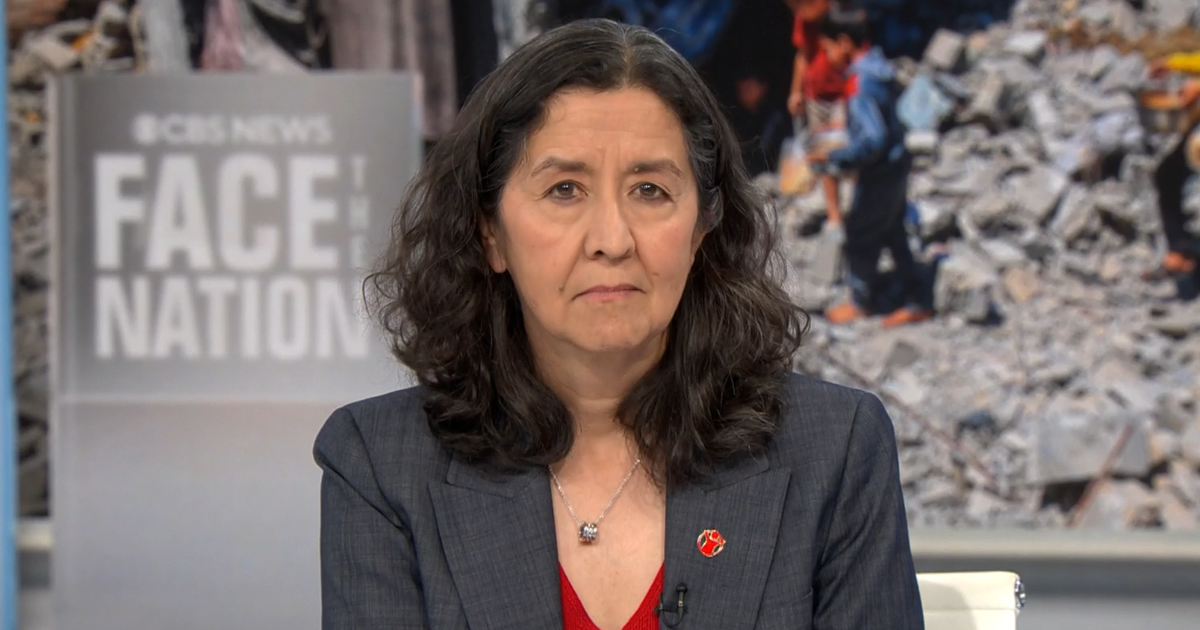
The following is a transcript of an interview with former Save the Children President and CEO Janti Soeripto that aired on “Face the Nation with Margaret Brennan” on May 10, 2026.
MARGARET BRENNAN: Now we turn to Janti Soeripto, who is the president and CEO of Save the Children US, which works to provide humanitarian aid and health services to children around the world. It's great to have you here this Mother's Day.
JANTI SOERIPTO: Thank you, Margaret and Happy Mother's Day.
MARGARET BRENNAN: You just came back from Sudan, which is one of the hardest places in the world to be a parent, to be a mother. Pope Leo called it an inhuman tragedy. The UN says 34 million people are in need of emergency aid. I know the US is trying to work on a humanitarian freeze, but tell me what you saw down there.
JANTI SOERIPTO: Well Margaret, the worst humanitarian crisis in the world, millions of people in need, and it's probably the one that gets the least attention related to need. It actually took me four days to get from here to see the first school we support there. Therefore, the level of barriers to planning and working to get support for children and mothers where they are is unbelievably difficult. You have to cross many lines of various military groups. It's really, really the last mile and – and the level of demand is really amazing. I see a lot of emergencies around the world, I see a lot of fragile states, but this was right up there.
MARGARET BRENNAN: I know the US has said that this is a proxy war now, but when you look at the need for humanitarian aid, some of the statistics that concerned me here were the level of sexual violence.
JANTI SOERIPTO: Yes.
MARGARET BRENNAN: It's being systematically used as a war tactic, according to the UN. 13 million people, especially women and girls, need support, according to the UN, related to that type of violence. That's four times higher than before the conflict. Doctors Without Borders said the war is 'being fought on the backs and bodies of women and girls,' but accused aid groups of not doing enough. Do you think the aid groups?
JANTI SOERIPTO: We are doing what we can, but I can certainly agree that it is not enough. We have no resources. And I would agree. What–what I heard there, and that's just the tip of the iceberg, was absolutely unbelievable, you know. Our partners there, we have about 150 partners in Darfur, which is where I was, all of them have lost their homes. They were expelled themselves. They lost their homes. Most of them come from El Fasher, where the last violence started in October. I spoke to a colleague who had to travel with her 16-year-old daughter. The daughter was threatened. He fought. I mean I saw the scars on his face. She fought to help her daughter, to keep her daughter alive and safe, and then she went out and was actually saved by someone. So this one had a happy ending in a way, but so, too many don't have that, and you can see it in the eyes of the women I spoke to. You know they go days without sleep just trying to keep themselves and their families alive. Many households in northern Darfur, where I was, where there are 700,000 people displaced from desert areas, most of those households are households headed by women. Men may- be killed or disappear or- or join warring parties. So these women do everything they can to keep their families and themselves alive.
MARGARET BRENNAN: There's a lot of aid that's stuck in that Hormuz crisis right now because of the Iran war. How important is the impact on the ability to provide goods to those who need them?
JANTI SOERIPTO: Yes, that's exactly what we're saying. You know, this is another part of the cost of war example, right? There is a human cost. Then there are financial costs, which in turn lead to human costs. Right now we have about half a million stocks stuck in Dubai that we can't get out, medicines, drugs. Transportation costs have increased, as you hear everywhere. So, you know, the Plumpy'nut treatment for malnutrition in young infants and young children now, what is it? 12 to 15% more expensive than pre-war. So it takes a long time to get there, because we have to find alternatives in order of – you know – compared to the direct route that we had. So, yes, it makes it difficult, and our logistics teams already have it- which has to be incredibly creative and flexible all the time because the planning of the country is also incredibly difficult to get approval, to- say, the asphalt road is finished after an hour- from the western border of Darfur. So from there on, it's really a very rocky road. So getting things there, even physically, takes days and sometimes weeks.
MARGARET BRENNAN: Let me ask you about the Middle East. The White House says there is 'significant progress' in implementing President Trump's 20-point Gaza peace plan. I know that you and many other organizations have said that, six months after the end of the fighting in Gaza, the plan is failing. Those are two strikingly different accounts of what happened in the world. What happened on the ground?
JANTI SOERIPTO: So we took the 20-point plan and- and we literally looked at, okay, now what do we see on the ground? So we took data, our staff accounts of what they were seeing, publicly available data from the UN and others, to say, okay, so is there less violence? Is there access, unrestricted access, of goods and personnel? And–and we scored accordingly. We have published a methodology, and we stand by those facts as we see them. There are still – we – we have 200 workers in Gaza who do heroic work every day.
MARGARET BRENNAN: Yes.
JANTI SOERIPTO: It is incredibly difficult for us to find the necessary materials. We can't bring in workers and then rotate so, no, that plan, as it stands, is not working.
MARGARET BRENNAN: Janti Soeripto, thank you for the work you do. We will be right back.