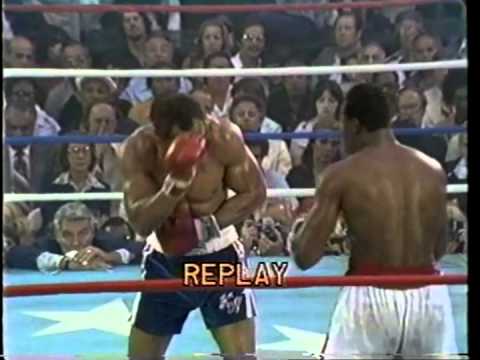
Larry Holmes Defeated Ken Norton in the Heavyweight Classic That Changed Boxing



Norton entered as WBC heavyweight champion, although his championship came under unusual circumstances. After Leon Spinks upset Muhammad Ali to win the undisputed heavyweight championship in February 1978, the WBC ordered Spinks to make his first defense against challenger Norton. Instead, Spinks chose a more lucrative matchup with Ali. WBC president José Sulaimán responded by stripping Spinks of the organization's title and promoting Norton to champion.
Although some critics called Norton a “paper champion” because he never won a belt in the ring, few questioned his credentials. He had already defeated Ali once, pushed him to the top in two fights, defeated Jimmy Young in a title fight, and established himself as one of the toughest fighters of the decade.
Although Norton was an established champion, Holmes represented the next generation. The undefeated 28-year-old from Easton, Pennsylvania, got his chance by dominating the feared boxer Earnie Shavers for the WBC championship a few months ago. Despite his perfect record of 27-0, Holmes entered as a slight underdog against the highly successful Norton, who had victories over Ali, Jerry Quarry, Jimmy Young and Duane Bobick.
The difference extends beyond experience. Norton earned between $2.3 million and $3.7 million for the fight, while Holmes earned about $500,000. Even in the promotion, Holmes is viewed as a contender trying to break out as the future face of the heavyweight division.
Holmes established his rhythm early on behind a piston-like left jab that would become his trademark, winning four of the opening five rounds on most cards. Norton gradually changed his approach, pressuring the action with heavy right hands and opening cuts inside Holmes' mouth in the middle rounds.
The momentum shifted repeatedly as both men received heavy punishment and continued to exchange championship distance.
Holmes again dominated the championship rounds, particularly the 12th and 13th, before Norton responded with a stunning round 14, shocking Holmes twice and finishing with a six-punch combination just before the bell.
After Norton finished 14th, the championship was decided in the 15th and final round. Norton started strongly and looked set to retain his title. Holmes responded at the last minute, landing cool combinations and ending the fight as the aggressor in one of boxing's most memorable final rounds.
After 15 rounds, Holmes received a narrow split decision with scores of 143-142, 143-142 and 142-143.
The decision was quickly contested. Many ringside spectators believed that Norton had done enough to retain the title, and the Associated Press also scored in his favor. Nevertheless, the belt was quickly recognized as one of the heavyweight championship fights.
Holmes' victory launched the reign of the heavyweight champion in boxing history. He would be able to defend the WBC title 20 times before becoming the first IBF heavyweight champion, establishing himself as one of the greatest boxers to ever win the title. Holmes later described Norton as one of the toughest opponents he had ever faced, and celebrated the victory by jumping into Caesars Palace's swimming pool.
For Norton, the defeat marked the end of his championship reign. Despite defeating many Hall of Fame opponents and one of the strongest books of his era, he never regained a world championship. The Holmes fight was his only defense of the WBC title, but it also cemented his reputation as one of the top heavyweights of the 1970s.
Almost fifty years later, Holmes vs. Norton is still on the losing end of boxing's biggest fight. Nearly fifty years later, Holmes vs. Norton remains the benchmark for heavyweight champion boxing. This fight launched Holmes' championship reign and is one of the best matches of Norton's career.