A well-preserved Byzantine-era city in the western desert is one of two important Egyptian discoveries on Saturday.
The recent discoveries at the Dakhla Oasis and at the Marina el-Alamein archaeological site, near Alexandria, are the latest findings that the Egyptian government hopes will boost the country's vital tourism sector, driven in part by antiquities.
Archaeologists too newly opened human remains and an abundance of artefacts in a section of Greco-Roman tombs dating back more than 2,300 years. The remains of two wild boars were found, which are rarely found in ancient Egyptian burial sites. At that time, pigs were known as Seth (or Set), a god associated with chaos and violence in ancient Egyptian mythology.
Along with the strategic Suez Canal, tourism is a major source of foreign exchange for the cash-strapped country.
Ministry of Tourism and Antiquities through AP
Details of daily life during the Byzantine Empire
The Ministry of Tourism and Antiquities said the first discovery revealed details of daily life, urban development and economic activities in the Dakhla Oasis in the fourth century, when Egypt was part of the Byzantine Empire.
The excavated areas include north-south crossings and east-west roads, creating open squares and public spaces, said Hisham el-Leithy, secretary-general of the supreme council of antiquities.
The basilica, which dates back to the mid-fourth century, stands at the head of the site, overlooking the main roads, as well as the remains of two towers to protect the outer area, said Mahmoud Massoud, chairman of the archaeological mission.
The oasis, located in the western province of Egypt, the New Valley in the western desert, is on UNESCO's Tentative List, which is a step to be added to the organization's World Heritage List.
A heavily fortified building with thick defensive walls, as well as several houses including reception halls and pitched roofs were found at the site, Massoud said.
Among them was the house of Tisous, identified as the deacon of the church and dating from the second half of the fourth century, which archaeologists believe was a chapel before the construction of the city church.
Archaeologists also found bread ovens, kitchens and stone grinding tools that were obviously used for food production. Other finds include well-preserved bronze coins with portraits of Byzantine emperors, Latin inscriptions and Christian symbols, and a group of gold coins from the reign of the Roman emperor Constantius II, who ruled between 337 and 361, the ministry said in a statement.
Diaa Zahran, the head of the department of Islamic, Coptic and Jewish Antiquities, said they found a collection of about 200 pieces of pottery that were used as writing materials. The fragments, known as ostraca, contain records of transactions, letters and other details of daily life, Zahran said. The pieces are “pads” of secret books, inventories, purchase records, and copies of books, said a report from the Metropolitan Museum of Art.
Ancient tombs were carved into the rock
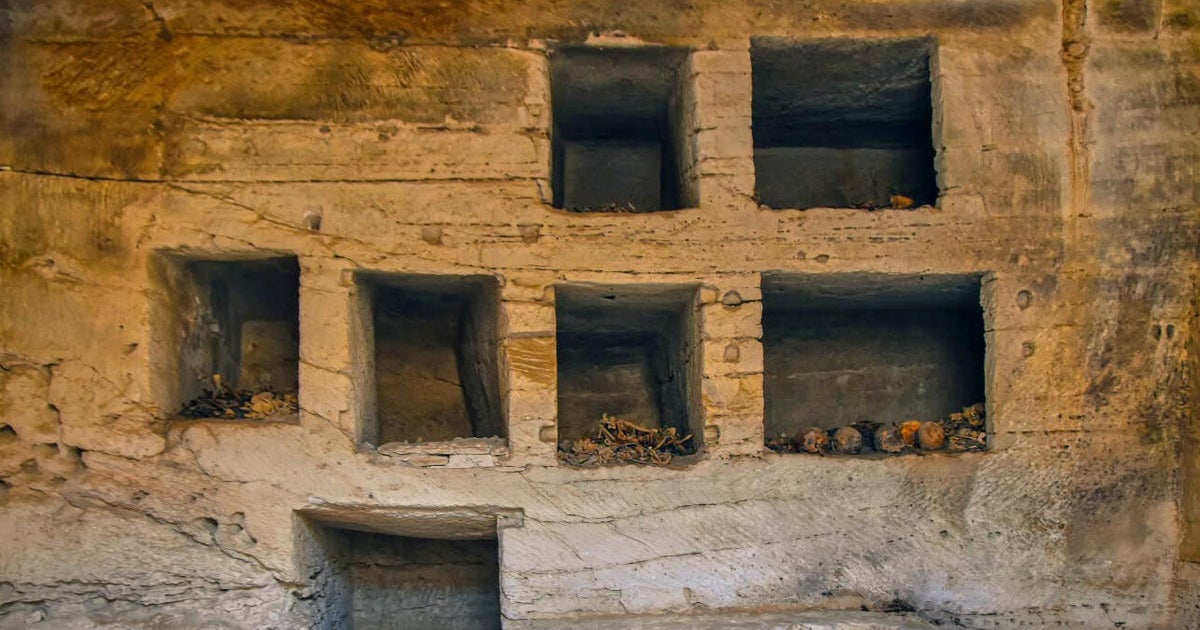
Separately, archaeologists discovered 18 ancient tombs at the Marina el-Alamein archaeological site, located 62 miles west of the Mediterranean city. Alexandria.
The findings include 11 stone-cut tombs, with an average depth of 26 meters, and seven limestone tombs, the department said. That has made the number of graves found in this area up to 48, said the department.
In this site, archaeologists found pottery, amphorae, lamps, plates, altars and limestone vessels, it said.
The head of the mission, Eman Abdel-Khaliq, said that they found a granite sarcophagus 8 meters long, with bones that are currently being researched. Next to the sarcophagus, they found the remains of a plaster sphinx statue, he said.
Ministry of Tourism and Antiquities through AP 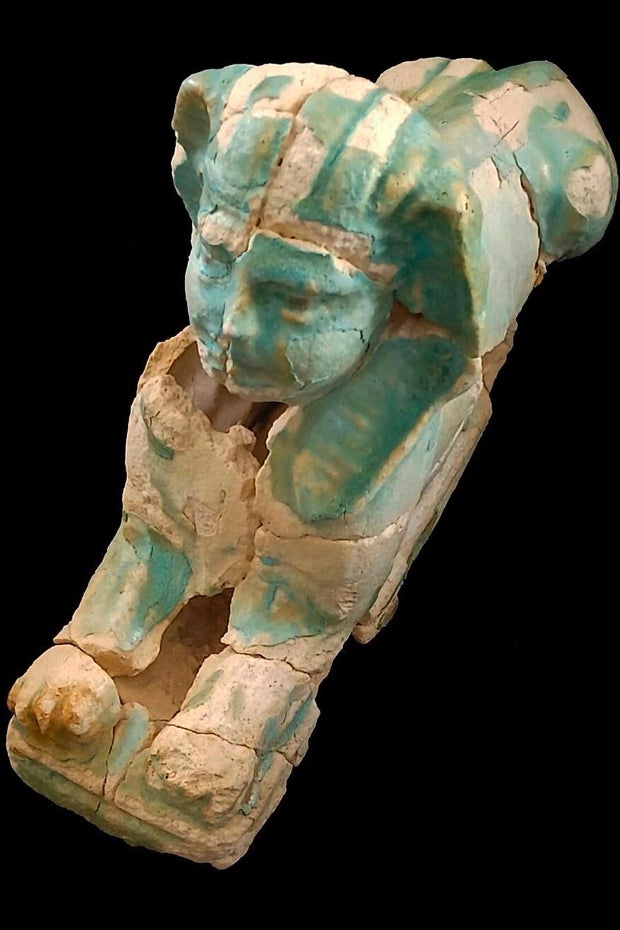
Abdel-Khaliq said they also found four pieces of gold placed in the mouths of some of the dead – known as the “golden tongue,” which was a practice consistent with the funeral beliefs of the time.
Marina el-Alamein is an archaeological site near the city of Alamein on the North Coast of Egypt. Discovered in 1986, archaeologists believe the site was the ancient Greco-Roman port city of Leukaspis in the Mediterranean, which was built in the second century and flourished until the fourth century, the ministry said. The city, where wealthy wheat and olive merchants built their homes, was almost wiped out by a fourth-century tsunami that devastated the area.
Egypt's tourism has begun to recover after years of political turmoil and violence following the 2011 riots, and the coronavirus pandemic.
A record 19 million tourists visited Egypt last year, an increase of 21% from 2024, according to official statistics. The first four months of 2026 saw 6.1 million visitors, compared to 5.7 million in the same period in 2025, the figures showed.