The race is on to find alternative routes for both Gulf fuels and clean energy.
This article appears in the July/August 2026 issue of Global Finance Magazine.
More than 30 years after the first Gulf War, it seemed unlikely, if not unthinkable, that images of burning oil fields would once again make headlines in the Middle East.
However, here we are again. And again, regional power producers must find a way to pick up the pieces.
“It's like Pandora's box has been opened or a genie has come out, but can it really be turned back?” said Laury Haytayan, energy expert and MENA director at the Natural Resource Governance Institute (NRGI), a non-profit organization based in the US. “Gulf countries think that this incident can happen again, and if it does, they don't want to find themselves in the same situation, so they need another way. Now, what kind of infrastructure should they invest in? Main pipelines? Road projects? Anything else? Everything is on the table.”
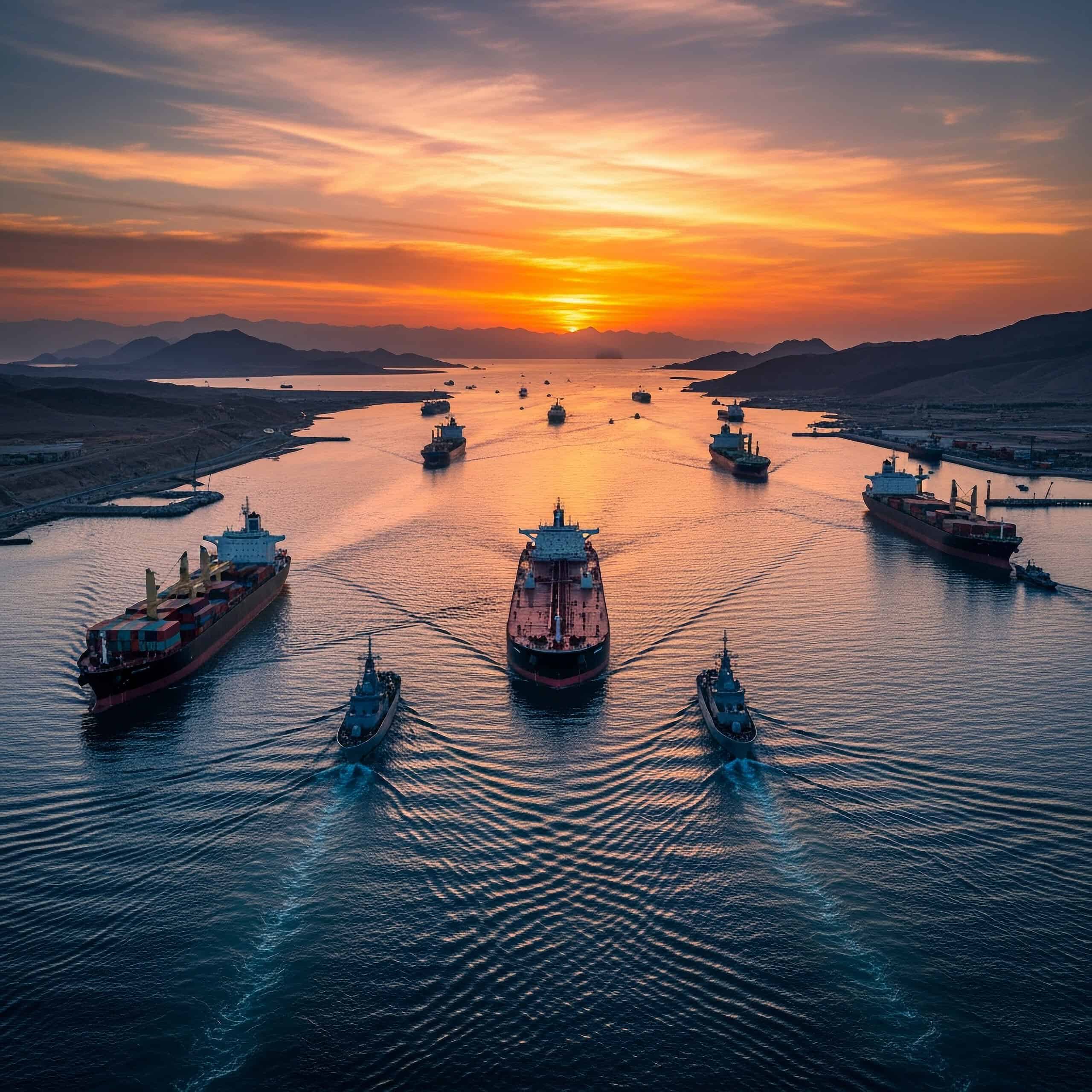
In March, the conflict between the US, Israel, and Iran escalated into a regional issue. Tehran retaliated against the Gulf Cooperation Council (GCC) states and blocked the Strait of Hormuz, a narrow waterway through which about a fifth of the world's oil and a large amount of liquefied natural gas (LNG) moves each day. The disruption pushed Brent Crude above $100 a barrel and sent shockwaves through global markets.
In the Persian Gulf regions whose economies depend heavily on hydrocarbon exports, the results have been unprecedented.
Damaged infrastructure and low export revenues have weighed on growth, although the impact varies by sub-region. According to the projections of the International Monetary Fund in April, the economy of Qatar is expected to decrease by 8.6%, while Kuwait and Bahrain are expected to occur by 0.6% and 0.5% respectively. Oman, Saudi Arabia, and the United Arab Emirates (UAE) are expected to show resilience, with GDP growth projected at 3.6%, 3.1%, and 3.1%, respectively.
“Saudi Arabia, Oman, and the UAE are better prepared because they have another way to bypass Hormuz,” Haytayan said. “Some are very capable of exporting hydrocarbons and their products.”
The conflict has affected nearby industries, including mining, petrochemicals, and metals. The effects are already being felt in global agriculture and food systems, where fertilizer supply chains are heavily dependent on natural gas.
The GCC, led by Saudi Arabia and Qatar, accounts for about 25% to 30% of global exports of ammonia, urea, phosphate, and sulfur, key inputs for nitrogen-based crop enhancers. Production constraints and supply chain constraints have tightened supply and pushed up prices. Regional producers such as QAFCO and SABIC may benefit from strong income in the short term, but long-term deficits could lead to food insecurity in import-dependent countries.
The aluminum sector has also been hit hard. Smelters, including EGA in the UAE, Qatalum in Qatar, and Alba in Bahrain, have suffered physical damage. In April, the International Aluminum Institute reported that regional emissions had dropped to about 11,000 tons per day, a 40% drop from pre-war levels. Although the Gulf accounts for only 8% of global output, it supplies 18% of European goods and 21% of US imports.
Building Alternatives to GCC Power
As elsewhere in the world, the discussion in the Gulf revolves around one question: How to avoid Hormuz?
Currently, most of the Gulf trade is diverted to the ports of Fujairah in the UAE, Muscat in Oman, and Jeddah and Yanbu in Saudi Arabia. This space has revived the importance of the Suez Canal and the Red Sea route, but it also raises eyebrows given the tense situation in Yemen and the Horn of Africa.
Many goods are transported by land. Governments are studying pipeline projects, railroads, and new roads to the north through Iraq, Jordan, Syria, and Turkey. Despite regional tensions, especially between Saudi Arabia and the UAE, industry experts expect consensus on building shared infrastructure. Private sector players taking advantage include UAE-based TruKKer, a digital goods platform often described as the Uber of trucking, which closed a $300 million funding round in May to meet growing demand.
None of the regional manufacturers are considering reducing fuel consumption. Instead, the financial sector continues to support investment in mining infrastructure and exports.
Qatar, already one of the world's largest LNG exporters, is moving ahead with the expansion of the North Field, a landmark project set to more than double production. Although the Iranian attack in March damaged some facilities and delayed the project, the expansion is still going well.
“Hydrocarbon financing continues to be an important strategy for the bank, underscoring its importance to the Qatari economy,” said Sheikh Abdulrahman bin Fahad bin Faisal Al Thani, Group CEO of Doha Bank. “Temporary energy issues and shipping challenges, including concerns about major shipping routes, have affected revenues in the near term, but the overall situation remains manageable.”
Qatar's long-term LNG contracts continue to provide revenue stability and predictability, he adds. The expansion of the North Field strengthens Qatar's position as a global LNG leader, making LNG a “major medium- to long-term driver of economic growth.”
The picture is similar in Kuwait, where hydrocarbons make up 90% of government revenue. The country is investing in overseas exploration and production as part of a strategy to increase the national product by a third over the next decade.
Oman has also announced plans to increase oil production to 1.2 million barrels per day by 2028, from about 1 million barrels per day currently. However, more oil and gas is only valuable if it can reach consumers.
In April, the UAE surprised many observers by leaving the Organization of Petroleum Exporting Countries (OPEC). In Abu Dhabi, quotas are increasingly at odds with expansion plans. Over the past few years, the alliance has spent nearly $150 billion to increase output by 5 million barrels per day, yet OPEC's limits keep output close to 3.5 million.
To strengthen their position in global energy markets, GCC producers are not only pumping more oil but also expanding their footprint.
“We will see increased investment in new sectors and storage facilities around the world,” Haytayan predicted.
In May, QatarEnergy signed a memorandum of cooperation with ConocoPhillips of the US and TotalEnergies of France to explore offshore reserves in Syria. Gulf oil majors are also pursuing opportunities in Africa and South America.
Diversity Is In The Plan
Despite the challenges and delays, the GCC countries continue to implement their long-term diversification plans.
“We believe that the current environment strengthens, rather than slows down, the momentum for diversified investment and ESG integration across the Gulf,” said a spokesman for the National Bank of Kuwait (NBK), which manages a sustainability portfolio of 6 billion and aims for 10 billion by 2030. long-term investments in renewables, hydrogen, sustainable infrastructure, and low-carbon technologies.”
GCC governments will “look for effective diversification,” Haytayan said. Authorities are likely to favor projects that generate revenue and return on investment, rather than large-scale projects like the desert city in Saudi Arabia that is heavily funded by Neom, he said.
For banks, opportunities for new products and services will emerge as the nonhydrocarbon and clean energy sectors develop. “Funding for energy transitions is still in the early stages in many institutions in the region,” Al Thani said. “ESG strategies are being developed and refined, but the allocation of other strengths remains small compared to conventional lending portfolios. The financial activity is expected to expand into renewables, hydrogen, and other low-carbon technologies, as investors' appetite gradually increases as projects grow and risk profiles are better understood. This category is well positioned to capture a large portion of the future lending budget.”
While the final resolution and long-term impact of the Iran war remains to be seen, the GCC can count on strong fundamentals, clear national strategies, and a strong will to remain a major player in global energy markets.
“While risk awareness has grown meaningfully, confidence in the long-term role of global energy markets remains the same,” said Al Thani.
Chloe Domat is a contributing writer covering the Middle East and North Africa.