Ticket prices are just the beginning of the rising costs many fans will face when trying to watch World Cup games this summer.
NJ Transit is charging $150 for round-trip tickets from Manhattan to the Meadowlands (regular price $12.60) for the World Cup finals, while shuttle buses for the host committee will cost $80.
The Massachusetts Bay Transportation Authority wants $80 to ride one of 14 commuter trains on the 30-mile trip from downtown Boston to Foxborough for games at Gillette Stadium. That's more than three times the regular price.
Parking in Kansas City, on the other hand, will set you back up to $900, depending on the game and lot.
In Southern California, however, it will cost $1.75 to get to SoFi Stadium via a combination of buses or trains from as far away as Claremont and Simi Valley. That's what it costs to get to the Inglewood area on any other day of the year; only two of the 11 World Cup cities in the US offer affordable public transportation.
“We're trying to make things easier,” said Conan Cheung, chief operating officer of the Los Angeles County Metropolitan Transportation Authority, or LA Metro, which is the nation's second-largest transit agency, serving more than 305 million passengers by 2025.
That's a departure from what fans reported before this summer's World Cup, which was marked by complaints about difficulty getting access to buy tickets, high ticket prices, shifts in seating after purchase, high fees and expensive match-day transportation.
“There is no set fare set across the board,” Cheung said of World Cup transportation. “We are committed to keeping our program accessible in the same way we plan the whole program to ensure that we support people from the moment they decide to come to LA for the World Cup.
Crews are preparing SoFi Stadium to host the World Cup this summer.
(Eduard Cauich / Los Angeles Times)
“We also want to ensure that your enjoyment and World Cup experience begins and ends at Metro.”
LA Metro was able to contain costs in part because it received $9.6 million in funding from the $100 million Congress gave the Federal Transit Administration to support transportation to and from World Cup stadiums. LA Metro is adding about 300 buses to its regular fleet to handle the increased demand, with shuttles providing nine direct routes to SoFi and various fan sites.
About 200 of those buses will be loaned to LA Metro from 11 regional companies. Additional security officers will also be added.
“I feel like I'm ready,” Cheung said, “but you never know what's going to happen. We've done special events big enough to know that you can do all the planning in the world, but you need to make sure you're prepared for emergencies and ready to roll at a moment's notice.”
Case in point: when Game 3 of last fall's World Series went into extra innings, LA Metro immediately extended the hours of operation of Metro buses and trains, ensuring that people had a ride home when the game ended after midnight.
“Part of our readiness is to do tabletop tests,” he said. “The point is to make sure that the flow from the parking lot, from the connection point and up is logical and was intuitive and easy to follow.”
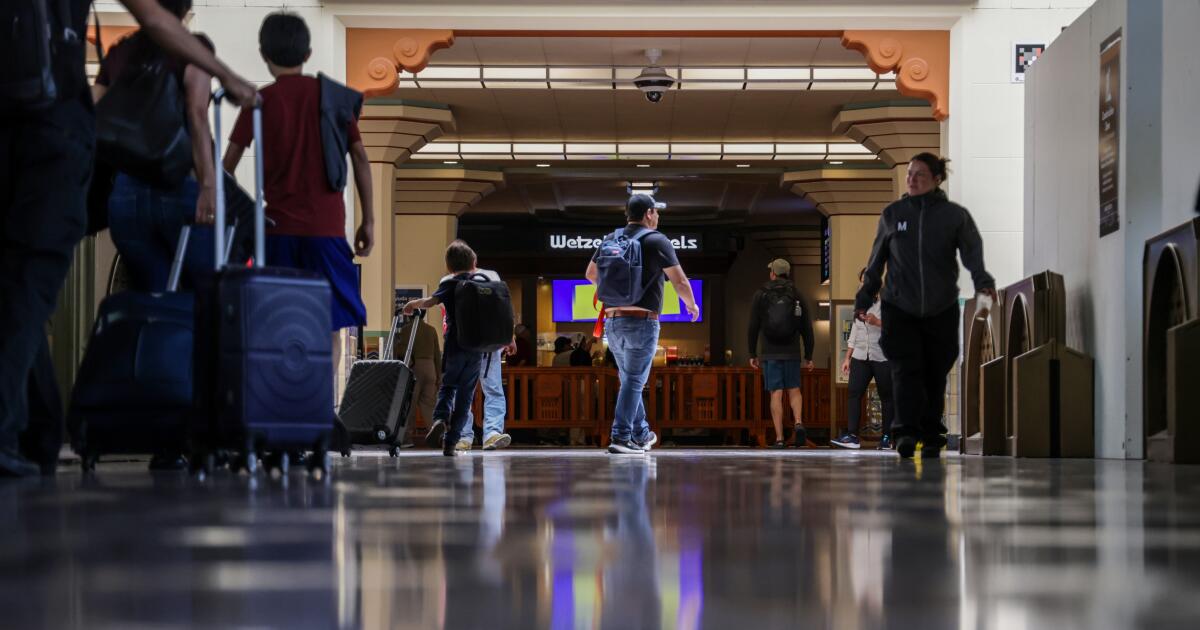
Since Metro trains do not go directly to SoFi, Cheung added buses to take fans from the stations to the stadium. Portable toilets and hydration stations will be available. And nine park-and-ride sites will be set up around LA and Orange counties. Save and pay for parking and everyone in your car can ride to the stadium for free. (Be sure to bring lots of friends as parking costs go from $59 to $102 for the opening game on June 12.)

Tourists from Japan rush to catch the Metro bus in March.
(Genaro Molina/Los Angeles Times)
Cheung said LA Metro has been preparing for the World Cup almost as long as some of the players. When Taylor Swift brought her Eras tour to SoFi in the summer of 2023, LA Metro used that as a dress rehearsal for the World Cup, expanding late-night service and adding free shuttles to nearby train stations.
That increased ridership by 25%, meaning fewer cars on the roads and highways leading to the stadium. Repeating that could be crucial during the World Cup as five of the eight games played at SoFi are expected to start at noon local time.
And just as Taylor Swift's concerts prepared the LA Metro for the World Cup, now the World Cup will help inform preparations for the 2028 Olympics.
“Many of the strategies that we are doing now – the process of working together not only with local authorities, federal and state organizations, and other transportation agencies in the regions – we are putting in place methods that will help not only in the Olympics and Paralympics, but at any time we need to come together to support our communities in special events. [or] natural disasters.”
For more information on LA Metro services in and around the World Cup, visit www.metro.net/riding/world-cup
⚽ Read the latest installment of On Soccer with Kevin Baxter. The weekly column takes you out of the spotlight and shines a light on unique stories. Listen to Baxter in this week's episode of “Corner of the Galaxy” podcast.