Transcript: Gen. Retired Frank McKenzie on “Face the Nation with Margaret Brennan,” July 12, 2026

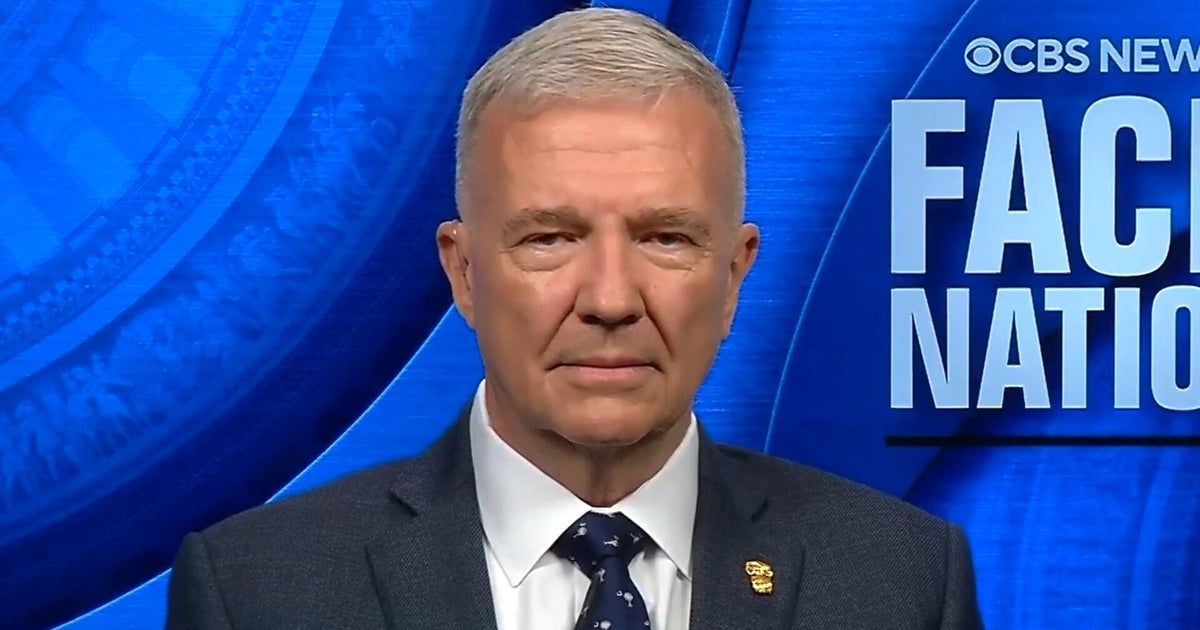
The following is the text of the interview with Gen. Frank McKenzie, former commander of the US Central Command and president of The Citadel, broadcast on the program “Face the Nation with Margaret Brennan” on July 12, 2026.
MARGARET BRENNAN: Now we go to the former commander of US Central Command, retired General Frank McKenzie. General, welcome again. You know, I was just looking back at my last Face the Nation interview with Lindsey Graham, and the senator said, “If this deal fails, President Trump will take the Strait of Hormuz by force. The US will control the Strait of Hormuz.” That happened three weeks ago. How does the United States end up controlling the Strait of Hormuz?
GENERAL FRANK MCKENZIE: Well, Margaret, we certainly have the ability to control the Strait of Hormuz if the president chooses to pursue that process. Look, what he's been trying to do is find a political and political solution, which I applaud, and I think we should all want to see it as the final outcome. However, the truth of the matter is that the Iranians generally only respond to military force and extreme pressure. Look, we're not talking about regime change here. What we are talking about is fixing – the ideas and actions of a strong, strong state, that is possible. We have the power to do that. That capability remains in the US military if the president chooses to employ it. That will include opening the Strait of Hormuz, keeping the Strait of Hormuz open, and in fact, seizing Kharg Island, if we choose to do so. And I would just say, as an aside, that's something we should consider doing because having Iranian soil would be an important factor in future negotiations with Iran. So all those options are on the table. I'm not sure where we're going with this, but I know we have these skills.
MARGARET BRENNAN: We have those capabilities, but the president has made it clear that he just wants – he wants a deal here. How do you explain to a layman when the president says we control the Strait of Hormuz, but CENTCOM says the military is deployed to ensure freedom of movement, which makes it sound like there is no free movement of cars here?
GEN. MCKENZIE: No, it's not like that now because we haven't used all the capabilities we have to open the Strait. We certainly can do that. It was necessary to place warships in narrow waters. Look, the US Navy doesn't like to do that, but they're very good at it, and if necessary, they can do it, and they can do it well. You have to go back to the basic principle of Iranian nationalism, which is to preserve the state. If you want to get permission from Iran, you have to pressure the regime directly, and you have to do it in a way that is likely to be available to them. We have those skills if the president chooses to go that way.
MARGARET BRENNAN: Do those capabilities need to involve underground forces? And have you been surprised by the amount of pain the Iranian leadership seems willing to take here, while rejecting all the financial incentives the Trump administration is offering?
GEN. MCKENZIE: Margaret, given the Iran-Iran history and their diplomatic stance over the years, it's not at all surprising about the current Iranian situation. A former CENTCOM commander once said, “You know, Iran has never met a war they can win or a negotiation they can lose.” And that is very true. What Iran wants to do is extend the negotiations in advance, arguing about the size of the table, who is in the room, the font on the document, everything about it – except for important issues. We need to recognize that, and we need to be prepared to pressure Iran into discussing the real issues of viruses. And by that, I mean opening the Strait of Hormuz, some movement with ballistic missiles, some movement in supporting proxies. All of those things can- we can find some kind of movement in all of those things. We just have to be willing to put pressure on Iran to achieve those goals.
MARGARET BRENNAN: I mean, Jordan said that in one night three missiles landed in their area, and there were no casualties, according to CENTCOM. But they shot in Bahrain, Kuwait, Qatar, Oman. They continue to be able to identify American partners and locations where American forces are present. Does that surprise you?
GEN. MCKENZIE: It doesn't surprise me at all. What surprises me is actually not – it doesn't surprise me, but what surprises me is that the Iranian attack was not large or powerful. Many years ago, when faced with situations like this, we thought that the Iranian response would be very strong. The fact that it's not very strong is a testament to the ability of Admiral Cooper and Central Command to pursue these goals and make it difficult for Iran to fashion, you know, massive coordinated strikes against our forces. Now look, these strikes will continue. This is not- this is not a bloodless effort that we have started–
MARGARET BRENNAN: Yes.
GEN. MCKENZIE: –and foundations will be hit, and buildings will be destroyed, and sadly, people will die. And if we are going to stay in this game and continue to deal with Iran, which I believe we are willing to do, we have to prepare for this.
MARGARET BRENNAN: Quick, your thoughts on Senator Graham?
GEN. MCKENZIE: Senator Graham represented the state of South Carolina. In our nation, the biggest voice in the national security space, and a certain friend of the Citadel, is the Military College of South Carolina. Over the years, you have done many good things in our school. In fact, he embodies the concept of a citizen soldier. A person who is not a professional military officer pursues a broad, deep, public service career, and yet wears a uniform and serves his nation. That's what we want to produce at Citadel. There is no better person to emulate than Lindsey Graham–
MARGARET BRENNAN: Right.
GEN. MCKENZIE: –and we will miss him dearly.
MARGARET BRENNAN: General, thank you for your time. We will be right back.