US Criticizes Lockdown of AI and Defense Forces as Signs of Sweden's Agreement on Global Economic Shift

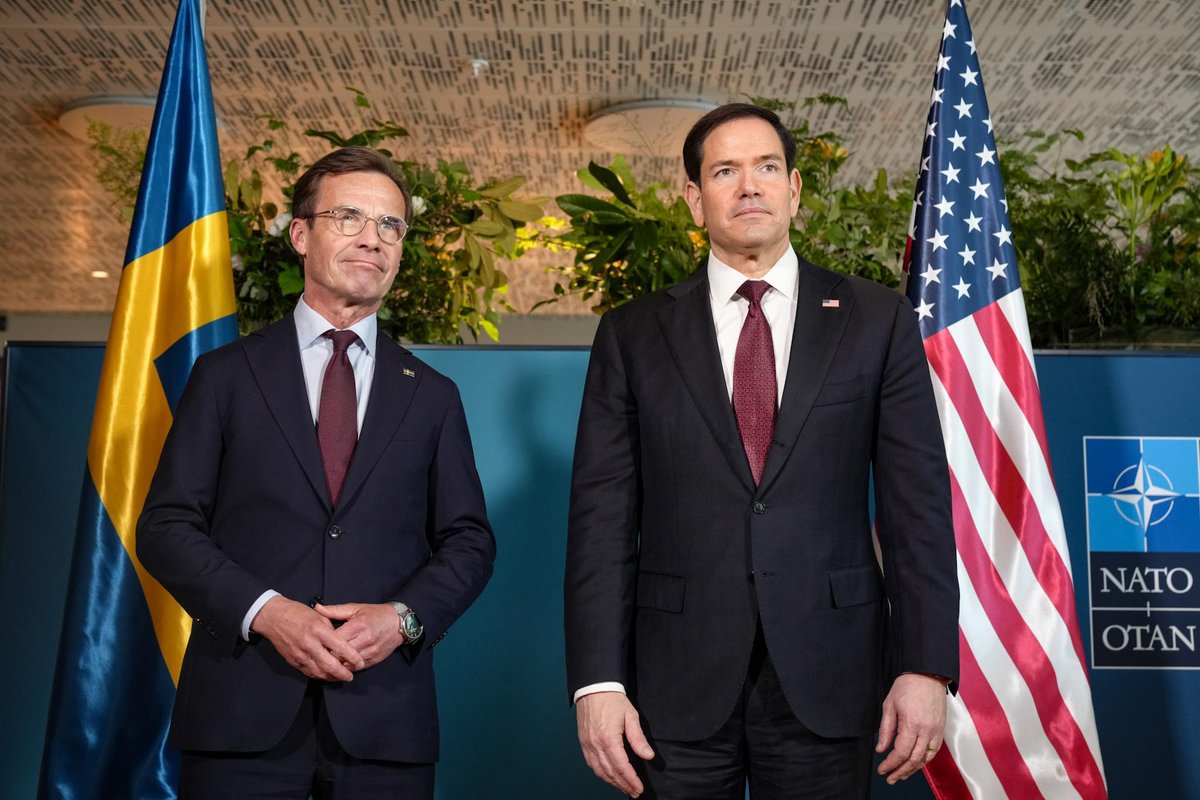
America is scrambling to protect AI, defense technology and future manufacturing capabilities after the United States and Sweden signed a new agreement aimed at protecting critical industries before the next global economic crisis.
The deal comes at a time when governments and large corporations are increasingly concerned about supply chain volatility, geopolitical tensions and the speed with which AI is beginning to reshape jobs, industries and industrial competition in the global economy.
Released by the White House on May 22, the new “Technology Prosperity Deal” includes artificial intelligence, robotics, advanced manufacturing, defense systems, telecommunications networks, nuclear power, quantum computing and key minerals used in batteries and industrial production.
The scale of the deal shows how the economic landscape has changed since the fall of the pandemic, which exposed how vulnerable Western economies have become to offshore manufacturing and foreign-controlled technology infrastructure.
For many years, advanced technology has been widely viewed as an area of commercial growth. That trend is rapidly diminishing as AI systems, semiconductor manufacturing, telecommunications networks and industrial automation become increasingly tied to economic security, military power and long-term political influence.
Washington has already committed billions to semiconductor plants, AI development and factory expansion as officials try to reduce reliance on overseas manufacturing. Sweden has become an important partner because of its strengths in telecommunications infrastructure, industrial engineering and advanced manufacturing at a time when governments are moving aggressively to protect industries seen as vital to future economic strength.
The agreement places a strong emphasis on “trusted” technology systems and secure supply chains, particularly AI networks, telecommunications infrastructure and industrial production. Behind the rhetoric of officials sits the growing fear of governments and companies alike: another major global disruption could seriously damage industries whose economies now depend on jobs, growth and national security.
Businesses across Europe and North America are already spending heavily to move suppliers, automate production and secure access to raw materials and advanced technology before the coming disruption hits global trade again. Many companies are also facing pressure from investors to cut costs and improve efficiency as higher borrowing costs and slower growth continue to squeeze profits.
That appeal for efficiency is accelerating automation in all industries that employ millions of people.
The agreement includes joint AI research tied to industrial automation, manufacturing systems and manufacturing technology. Companies are looking for ways to produce goods faster while reducing labor costs and reducing operational risk in an economy where uncertainty remains high and long-term growth seems difficult to secure.
The results have begun to spread to parts of the labor market. The manufacturing, engineering, transportation and telecommunications sectors are all facing pressure to adapt as AI and automation expand deeper into industries that once seemed immune to rapid technological disruption.
The partnership also drives deeper collaboration in robotics, digital industrial systems and AI-driven industrial optimization. For workers, that could end up resetting employment levels, wage growth and long-term job stability across industrial regions still recovering from years of factory closings and supply chain shocks.
Energy security has also become a key factor in the deal as the US and Sweden expand cooperation on nuclear power, advanced reactors and key minerals needed for next-generation infrastructure. Governments are increasingly concerned about how future electricity demand from AI data centers, automated industries and the proliferation of digital infrastructure could strain energy systems and cause another wave of price pressure.
The defense aspects of the agreement reveal how quickly economic competition and national security are intertwined. The agreement calls for strong cooperation in defense innovation, technology transfer and reducing barriers to industrial cooperation between the two countries. Officials are also strengthening intellectual property protection, research security and access to critical technologies related to AI systems, telecommunications and advanced industrial development.
The broader message behind the deal will be hard to ignore. Governments no longer believe that economic power can be separated from controlling technology, production capacity and energy infrastructure. As the race for AI dominance accelerates, countries are moving quickly to secure industrial power before the next financial, geopolitical or technological shock reshapes the global economy once again.
For workers and consumers who are already facing rising costs, economic uncertainty and growing concerns about automation, the shift may become more apparent in the next few years as governments and companies push to delve into an AI-driven economy that could reward efficiency and industrial control more quickly than protect long-term job stability.