Archaeologists at Pompeii use AI to reveal the face of a victim trying to escape the eruption of Mount Vesuvius

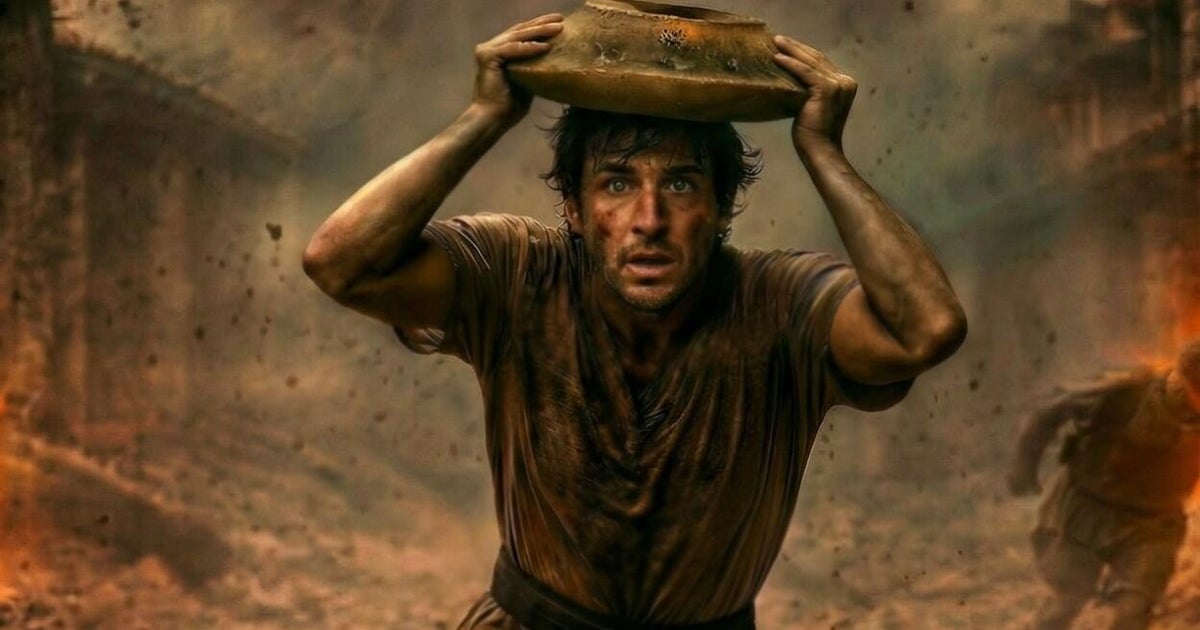
Archaeologists at the ancient Roman site of Pompeii have used artificial intelligence for the first time to reconstruct the face of a victim of the AD 79 eruption of Mount Vesuvius that devastated the city, offering a new way of understanding one of history's most famous natural disasters.
The digital image represents an elderly man who was among two victims who were found trying to flee the city to the coast of what is now Italy during the volcanic eruption. Researchers believe the man died early in the disaster, when volcanic debris fell.
The reconstruction was developed by the Pompeii Archaeological Park in collaboration with the University of Padua and is based on archaeological research data from excavations near the Porta Stabia necropolis, just outside the ancient city walls.
Pompeii, a UNESCO World Heritage site near Naples, was buried under ash and smoke when Mount Vesuvius erupted nearly 2,000 years ago, preserving the city and its thousands of inhabitants in incredible detail.
Archaeologists found the victim holding a terracotta mortar, which they interpreted as an improvised attempt to protect his head from falling lapilli, small volcanic stones that rained down during the eruption.
Ancient accounts – including those of the Roman writer Pliny the Younger – describe citizens using objects to protect themselves as ash and debris engulfed the city.
The man also carried an oil lamp, a small metal ring and 10 copper coins, personal items that provide insight into his last moments and daily life in Pompeii before the disaster.
Archaeologists noted that the victim, along with many others, were found near the gates of the city, stressing that “it must be remembered that many may have lost their lives outside the city, trying to reach the coast.”
Last year, archaeologists found evidence pointing to the resettlement of Pompeii after the devastating explosion, because some survivors could not start a new life elsewhere.
The digital image was created using artificial intelligence and image editing techniques designed to translate skeletal and archaeological data into a more realistic image.
AP
“The size of the archaeological data is now such that only with the help of artificial intelligence we will be able to adequately protect and improve. If used properly, AI can contribute to the revival of ancient studies,” said the director of the Pompeii park Gabriel Zuchtriegel in a statement.
The project aims to make archaeological research more accessible and emotionally engaging to the public while maintaining a scientific foundation, the researchers said.
“Pompeii is perhaps the world's most prestigious archaeological site where every new discovery illuminates with enthusiasm the plan of ancient life,” Italian Culture Minister Alessandro Giuli said in a statement. “Investigations carried out through these excavations show that new methods, carefully applied, can give us new insights into history.”
Earlier this year, archaeologists announced that they had found a A 2,000-year-old love note and a gladiator fight scene depicted on the wall of Pompeii.